Kitchen wall tiles change the whole feel of a kitchen, and choosing the right ones depends on size, colour, layout and budget. Metro, hexagon, patterned, herringbone, large-format, colour-block, textured and worktop-matching tiles cover the main styles UK homeowners choose from. Colour choice matters just as much as tile style, with white, grey, blue and green working best depending on the kitchen’s size and light. Layout also shapes the final look, and brick-bond, herringbone, stack bond, basketweave and chevron each suit different wall shapes and tile types.
A splashback works well for most kitchens, while a full wall suits bigger budgets and bolder designs. Splashback areas, in particular, need tiles that handle heat, grease and water splashes, which makes metro, patterned, mosaic, large-format and mirrored tiles strong choices. Once tiled, regular cleaning and proper grout care keep a kitchen wall looking fresh for years.
This guide covers every part of choosing, laying and maintaining kitchen wall tiles, so you can pick a style that suits your kitchen and keep it looking good long after installation.
What Are the Best Kitchen Wall Tile Ideas?

The best kitchen wall tile ideas are metro tiles, hexagon tiles, patterned tiles, herringbone tiles, large-format tiles, colour-block tiles, textured tiles and worktop-matching tiles. These 8 styles cover the main kitchen tile choices in UK homes. Kitchen size, light levels and cabinet colour determine the most suitable style among these 8 options.
Metro Tiles

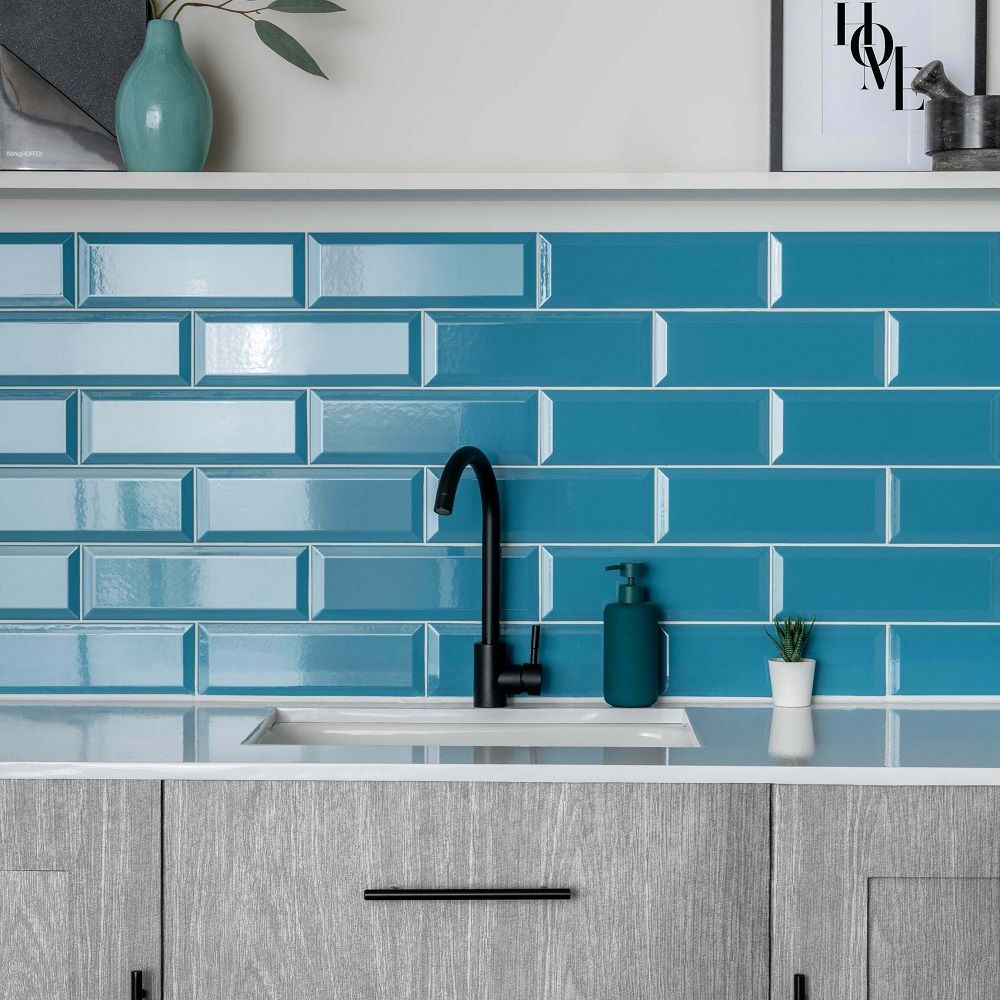
Metro tiles are small rectangular tiles measuring 100mm x 200mm on average. Metro tiles cost £15 to £30 per square metre in the UK market. A brick-bond layout gives metro tiles a classic, timeless finish. Metro tiles suit small kitchens and large kitchens equally.
Hexagon Tiles

Hexagon tiles are six-sided tiles that create a geometric wall pattern. Hexagon tiles suit small kitchens with limited wall space. The six-sided shape adds visual depth to a flat wall. Plain and patterned hexagon tiles both work for a modern kitchen finish.
Patterned Tiles

Patterned tiles carry a printed decorative design on the tile surface. Moroccan and Spanish-style patterns are the most common patterned tile designs in UK kitchens. Patterned tiles work best as a single feature wall behind a hob or sink. A patterned feature wall avoids visual overcrowding in the wider kitchen.
Herringbone Tiles

Herringbone tiles follow a zigzag layout at a 45-degree angle. Herringbone layouts widen the visual appearance of a narrow kitchen wall. Galley kitchens benefit most from a herringbone layout. Metro tiles and large-format tiles both suit a herringbone layout equally.
Large-Format Tiles

Large-format tiles measure 600mm x 300mm or above per tile. Large-format tiles reduce the number of grout lines on a kitchen wall. Fewer grout lines lower the cleaning time for a kitchen wall. Large-format tiles suit a modern, low-maintenance kitchen design.
Colour-Block Tiles
Colour-block tiles carry a single, solid colour across the tile surface. Colour-block tiles suit open-plan kitchens connected to a living or dining space. Bold colour choices create a strong style statement on a kitchen wall. Minimal cabinetry pairs well with colour-block tiles.
Textured Tiles

Textured tiles carry a raised, ribbed or fluted surface pattern. Textured tiles add a three-dimensional feel to a flat kitchen wall. Light reflects differently across a textured tile surface compared to a flat tile surface. Textured tiles suit a designer-style kitchen finish.
Worktop-Matching Tiles
Worktop-matching tiles share the same colour or material as the kitchen worktop. Porcelain and quartz composite tiles match granite and quartz worktops most closely. A matched worktop and tile combination creates a coordinated kitchen design. Worktop-matching tiles suit kitchens with a single dominant material theme.
Which Kitchen Wall Tile Styles Are Most Popular?

Metro tiles are the most popular kitchen wall tile style in UK homes. Metro tiles suit both period and modern kitchens equally. Their classic brick-bond layout keeps them in demand across different design trends. Hexagon tiles and large-format tiles follow metro tiles in popularity.
Metro Tiles as the Top Choice
Metro tiles top the popularity list among UK kitchen renovations. Their simple shape fits traditional, modern and industrial kitchen styles. Low cost and easy installation add to their wide appeal. White and off-white metro tiles remain the most requested colour choice.
Hexagon Tiles as a Rising Trend
Hexagon tiles rank as a fast-growing style choice in UK kitchens. Their geometric shape suits contemporary and Scandinavian-style kitchens. Homeowners with small kitchens choose hexagon tiles most often. Matte-finish hexagon tiles are the preferred texture in current kitchen designs.
Large-Format Tiles for Modern Kitchens
Large-format tiles rank high among homeowners seeking a minimalist kitchen. Fewer grout lines give large-format tiles a seamless, modern appearance. Open-plan kitchens use large-format tiles most frequently. Grey and stone-effect large-format tiles are the top colour picks.
Patterned Tiles for Statement Walls
Patterned tiles remain popular for a single feature wall in a kitchen. Moroccan-style patterns dominate the patterned tile category in UK homes. Homeowners pair patterned tiles with plain metro or large-format tiles on the remaining walls. This combination balances a bold look with a calm backdrop.
What Kitchen Wall Tile Colours Work Best?

White, grey, blue and green work best as kitchen wall tile colours. Kitchen size and light level decide the best colour choice for a kitchen wall. Light colours suit small kitchens, and dark colours suit large, bright kitchens. Cabinet colour and worktop material also guide the final tile colour choice.
White Tiles

White tiles suit small and low-light kitchens. White reflects natural light across a kitchen wall and brightens a dim room. A small kitchen looks larger with white tiles compared to darker shades. White pairs with any cabinet colour, including wood, navy and black finishes, which makes it a flexible choice for most kitchen styles.
Grey Tiles

Grey tiles suit modern kitchen designs. Grey pairs well with steel appliances and matte cabinet finishes for a clean, contemporary look. Light grey brightens a kitchen wall, while dark grey adds contrast against pale worktops. Grey works as a neutral base colour, which allows bold accent pieces to stand out.
Blue Tiles

Blue tiles suit traditional and coastal-style kitchens. Navy blue creates a bold contrast against white cabinetry and adds a classic, timeless feel. Pale blue suits a softer, country-style kitchen with a calm colour palette. Blue pairs well with brass and gold fittings, which enhances a vintage or coastal theme.
Green Tiles

Green tiles suit kitchens with wooden cabinets or worktops. Sage and olive rank as the most popular green shades in UK kitchens today. Green adds a natural, earthy tone to a kitchen wall and works well in farmhouse-style spaces. Dark green pairs with brass and copper hardware for a rich, warm finish.
What Tile Layout Patterns Work Best in a Kitchen?

Brick-bond, herringbone, stack bond, basketweave and chevron are the best kitchen tile layouts. The right one depends on your wall size and tile shape. A narrow wall does better with a layout that adds width. A plain wall does better with one that adds a bit of movement.
Brick-Bond Layout
Brick-bond is the classic choice for metro tiles. Each row sits offset from the one below, just like a real brick wall. It’s simple, timeless and works with almost any kitchen style. This is still the most common layout you’ll see in UK kitchens.
Herringbone Layout
Herringbone works great on narrow kitchen walls. The tiles sit at a 45-degree angle, creating a zigzag look. It makes a tight space feel wider and adds some life to a plain wall. It looks great with both metro and large-format tiles.
Stack-Bond Layout
Stack bond suits large tiles best. The tiles line up directly on top of each other in neat rows. It gives a clean, grid-like look that feels modern and minimal. If you want a sleek, seamless kitchen, this is a solid pick.
Basketweave Layout
Basketweave suits a more traditional kitchen. Tiles are laid in pairs that alternate direction, forming a woven pattern. It adds texture to a wall that would otherwise feel flat. It works especially well behind a hob or sink as a small feature.
Chevron Layout
Chevron is for anyone who wants a bold, eye-catching wall. The tiles are cut at an angle so they meet in a sharp point, forming a continuous V shape. Unlike herringbone, chevron gives you an unbroken line rather than a zigzag. It’s a great pick for a modern kitchen that wants to stand out.
What Are the Best Kitchen Wall Tile Ideas for a Splashback?

Metro tiles, patterned tiles, mosaic tiles, large-format tiles and mirrored tiles are the best splashback ideas for a kitchen. A splashback sits behind the hob or sink, so it needs to handle heat, splashes and grease. The right tile depends on how bold or simple you want that area to look.
Metro Tile Splashback
Metro tiles give a splashback a clean, classic look. They’re easy to wipe down and hold up well against heat and grease. A herringbone or brick-bond layout adds a bit of extra style without overdoing it. This is a safe, popular choice for most kitchens.
Patterned Tile Splashback
Patterned tiles turn a splashback into the star of the kitchen. Moroccan and Spanish-style designs work especially well here, since the splashback area is small enough to handle a bold pattern. Pairing patterned tiles with plain walls elsewhere keeps the kitchen from feeling too busy. This is a great option if you want one standout feature.
Mosaic Tile Splashback
Mosaic tiles add texture and detail to a splashback. The small tile pieces catch the light differently, giving the wall some depth and shine. Glass and metallic mosaic tiles work particularly well behind a hob for a bit of sparkle. This style suits kitchens that want a subtle but eye-catching detail.
Large-Format Tile Splashback
Large-format tiles give a splashback a smooth, seamless finish. Fewer grout lines mean less grease and grime build-up over time, which makes cleaning much easier. Stone-effect or plain colour large-format tiles work best for a minimal, modern kitchen. This is a strong pick for anyone who wants low-maintenance style.
Mirrored Tile Splashback
Mirrored tiles make a small kitchen feel bigger and brighter. They bounce light around the room, which helps kitchens with limited natural light. Bevelled mirror tiles add a touch of glamour behind a hob or sink. This works best in kitchens that get little daylight and need a lift.
Should You Tile the Whole Kitchen Wall or Just a Splashback?

A splashback suits most kitchens, and a full wall suits kitchens with a larger budget or a bolder design goal. A splashback covers the wall area behind the hob and sink. A full wall covers the wall from worktop to ceiling or beyond. Budget, kitchen size and design goal determine the correct choice between the two options.
Splashback Coverage
A splashback protects the wall area with the highest exposure to heat, grease and water splashes. This area sits directly behind the hob and sink. A splashback uses fewer tiles than a full wall, which lowers the total material cost. Kitchens with painted or panelled walls elsewhere pair well with a splashback-only layout.
Full Wall Coverage
A full wall gives a kitchen a complete, high-end finish. This layout suits bold patterns, colour-block tiles and feature tiles, since the larger surface area displays the design more clearly. Open-plan kitchens use a full wall most often, since the tiled wall connects the kitchen visually to an adjoining living or dining space. A full wall costs more than a splashback, due to the higher tile quantity required.
Choosing Between the Two
Budget and design goal decide the final layout choice. A splashback suits a practical, lower-cost kitchen update. A full wall suits a kitchen renovation with a larger budget and a stronger visual impact goal. A mixed layout, with a full wall on one side and a splashback on the rest, works for kitchens that want both practicality and a design feature.
How Do You Clean and Maintain Kitchen Wall Tiles?

Regular wiping, gentle cleaning products and correct grout care keep kitchen wall tiles clean and long-lasting. Grease, steam and food splashes build up fastest on tiles near the hob and sink. A simple weekly cleaning routine prevents stains and keeps grout lines looking fresh.
Daily and Weekly Cleaning
A warm water and mild soap solution removes most everyday grease and dirt from kitchen tiles. A soft cloth or sponge works best, since abrasive scourers scratch glazed tile surfaces over time. Wiping tiles after cooking prevents grease from hardening and becoming harder to remove later. A quick weekly wipe-down keeps tiles looking new with minimal effort.
Removing Tough Grease and Stains
A mix of white vinegar and water cuts through tough grease on kitchen tiles. This solution works well on both glazed ceramic and porcelain tiles without damaging the surface. Baking soda paste lifts stubborn stains from textured or patterned tiles. Strong bleach-based cleaners should be avoided on coloured or patterned tiles, since bleach fades colour pigments over time.
Grout Cleaning and Care
Grout lines need separate attention from the tile surface, since grout absorbs grease and moisture more easily. A grout brush and a baking soda paste remove dirt from grout lines effectively. Sealing grout once a year prevents staining and keeps it looking bright. Dark grout hides stains better than white grout, which makes it a practical choice for busy kitchens.
Long-Term Tile Maintenance
Yearly resealing keeps porous tiles, such as natural stone, resistant to stains and water damage. Checking for cracked or loose tiles early prevents water from getting behind the tile and damaging the wall underneath. Replacing damaged tiles quickly stops further damage from spreading to nearby tiles. Good ventilation in the kitchen reduces steam build-up, which lowers the amount of grime that settles on tiles over time.

Here at Tile Mountain, we not only have a huge range of tiles to suit every purpose, we also have a wealth of tiling knowledge gained from over 30 years in the tile industry, (which we’ll do or best to share with you across these very pages).
Whether you’re looking for the perfect tiles for your next home improvement project, are searching for some style inspiration, or simply need a bit of help and advice, you’re in the right place.