
Format versatility supports practical installation and design flexibility. Rectangle tiles create elongated floor lines, while square tiles reinforce structured grid layouts. Matt tiles offer a natural, understated finish ideal for balanced schemes, whereas semi polished tiles increase light reflection and highlight aggregate detailing.
Tile Mountain, with showrooms across the UK, offers budget-friendly tiles, fast next-day delivery, expert advice, and free tile samples to help you find the perfect design.
Patterned Tiles | Travertine Effect Tiles | Marble Effect Tiles | Wood Effect Tiles | Stone Effect Tiles | Concrete Effect Tiles | Parquet Effect Tiles | Slate Effect Tiles
Terrazzo Tiles
Sort by:
Format versatility supports practical installation and design flexibility. Rectangle tiles create elongated floor lines, while square tiles reinforce structured grid layouts. Matt tiles offer a natural, understated finish ideal for balanced schemes, whereas semi polished tiles increase light reflection and highlight aggregate detailing.
Tile Mountain, with showrooms across the UK, offers budget-friendly tiles, fast next-day delivery, expert advice, and free tile samples to help you find the perfect design.
Patterned Tiles | Travertine Effect Tiles | Marble Effect Tiles | Wood Effect Tiles | Stone Effect Tiles | Concrete Effect Tiles | Parquet Effect Tiles | Slate Effect Tiles

Terrazzo Tiles FAQ'S
What are terrazzo tiles?
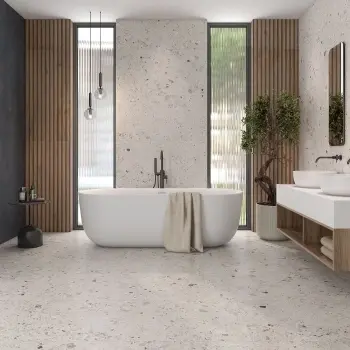
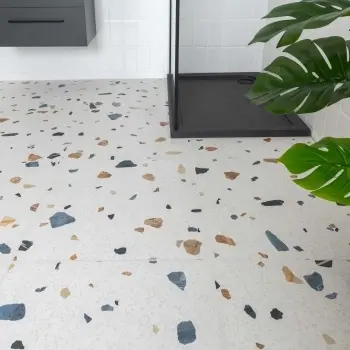
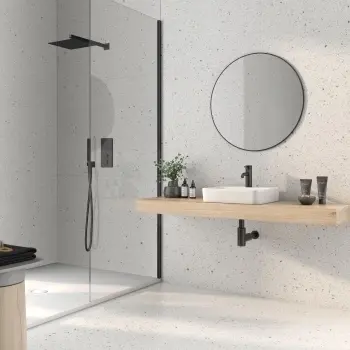
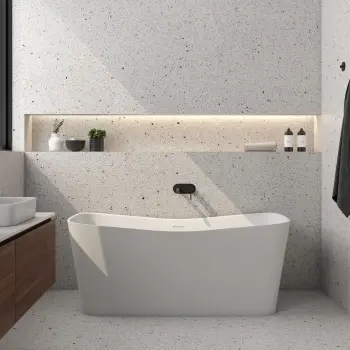
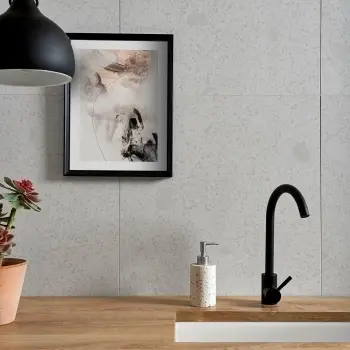
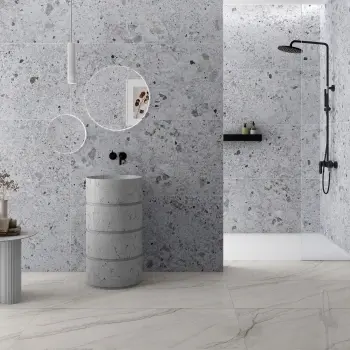
Terrazzo tiles are composite tiles featuring scattered stone and marble chips embedded in a smooth base that create speckled, decorative surfaces ideal for floors and walls.
Are Terrazzo Tiles Worth the Investment Compared to Carpet, Vinyl, or Wood?
Yes, terrazzo tiles offer longevity and durability that surpass many flooring options. With a lifespan of over 40 years, low maintenance, and resistance to wear, they save money over time. Their timeless aesthetic enhances both modern homes and commercial spaces, combining style with practicality, making them a solid long-term flooring choice.
Are Terrazzo Tiles Slippery?
Terrazzo tiles are not inherently slippery, but finish choice affects safety. Polished, high-gloss surfaces can be more slippery, especially when wet, so non-slip additives or textured finishes are recommended for bathrooms, kitchens, or outdoor areas. Cement-based terrazzo generally provides better natural grip, while resin tiles may require extra consideration to ensure slip resistance.
Do Terrazzo Tiles Work with Underfloor Heating?
Yes, terrazzo tiles are compatible with underfloor heating systems. However, terrazzo can feel naturally cold, so radiant heating is often added for comfort. Both cement and resin terrazzo conduct heat efficiently, allowing warm floors without compromising durability or aesthetics. Proper installation ensures even heat distribution and prevents cracking in thinner resin tiles.
What Is the Difference Between Cement and Resin Terrazzo?
Cement-based terrazzo is thicker (up to 40mm), heavier, more porous, and has a classic, earthy look. Resin or epoxy terrazzo is thinner (around 10mm), flexible, non-porous, and available in a wider range of vibrant colours. Resin is less likely to crack and offers modern design versatility, while cement provides a traditional, solid appearance.
Can Terrazzo Tiles Be Used Outdoors?
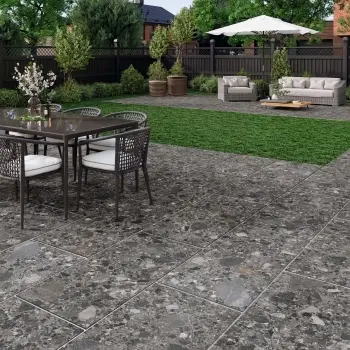
Yes, terrazzo can be used outdoors, but material choice matters. Cement-based terrazzo is more durable against weather, UV exposure, and frost, making it ideal for patios or terraces. Resin or epoxy terrazzo is sensitive to UV and can expand or discolour, so it’s better suited to indoor applications or shaded outdoor areas.
Can Terrazzo Tiles Be Installed Over Existing Tiles?
In some cases, resin terrazzo can be installed over sound, level existing tiles or concrete. Proper priming and surface preparation are essential to ensure adhesion and prevent cracking. Cement terrazzo is heavier and usually requires a suitable substrate, so professional guidance is recommended to ensure structural integrity and long-lasting installation.
Are Terrazzo Tiles High Maintenance?
Terrazzo tiles are considered low maintenance. Daily cleaning typically requires only damp mopping with pH-neutral cleaners. Most terrazzo floors benefit from resealing every 12–18 months to prevent staining. Compared to natural stone or wood, they are easier to maintain, stain-resistant, and highly durable, making them ideal for both residential and commercial settings.
What Thickness Are Terrazzo Tiles, and Will They Fit Floor Height Requirements?
Resin terrazzo tiles are typically 10–12mm thick, while cement-based tiles can reach 30–40mm. Thicker cement tiles may require adjustments for floor height, especially when layering over existing surfaces. Resin tiles are thinner and more flexible, making them easier to integrate into renovations without major structural changes.
Can Terrazzo Tiles Be Installed as a DIY Project, or Is Professional Installation Required?
Professional installation is strongly recommended due to the technical complexity of terrazzo. Grinding, polishing, and proper mixing of resin or cement require specialized equipment and expertise. While some resin terrazzo kits may be DIY-friendly, achieving a high-quality, long-lasting finish is usually best left to trained installers to avoid cracking, uneven surfaces, or adhesion issues.