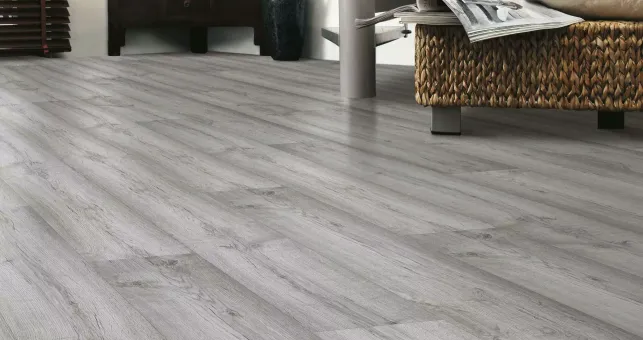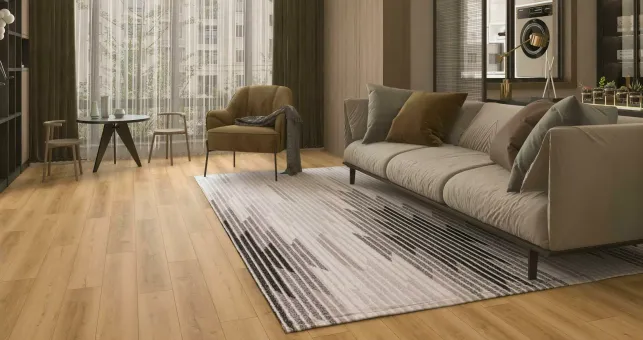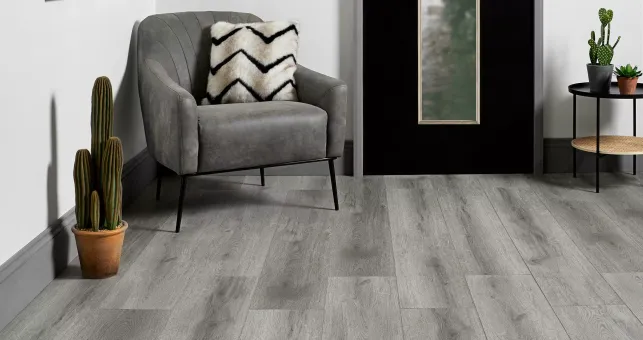
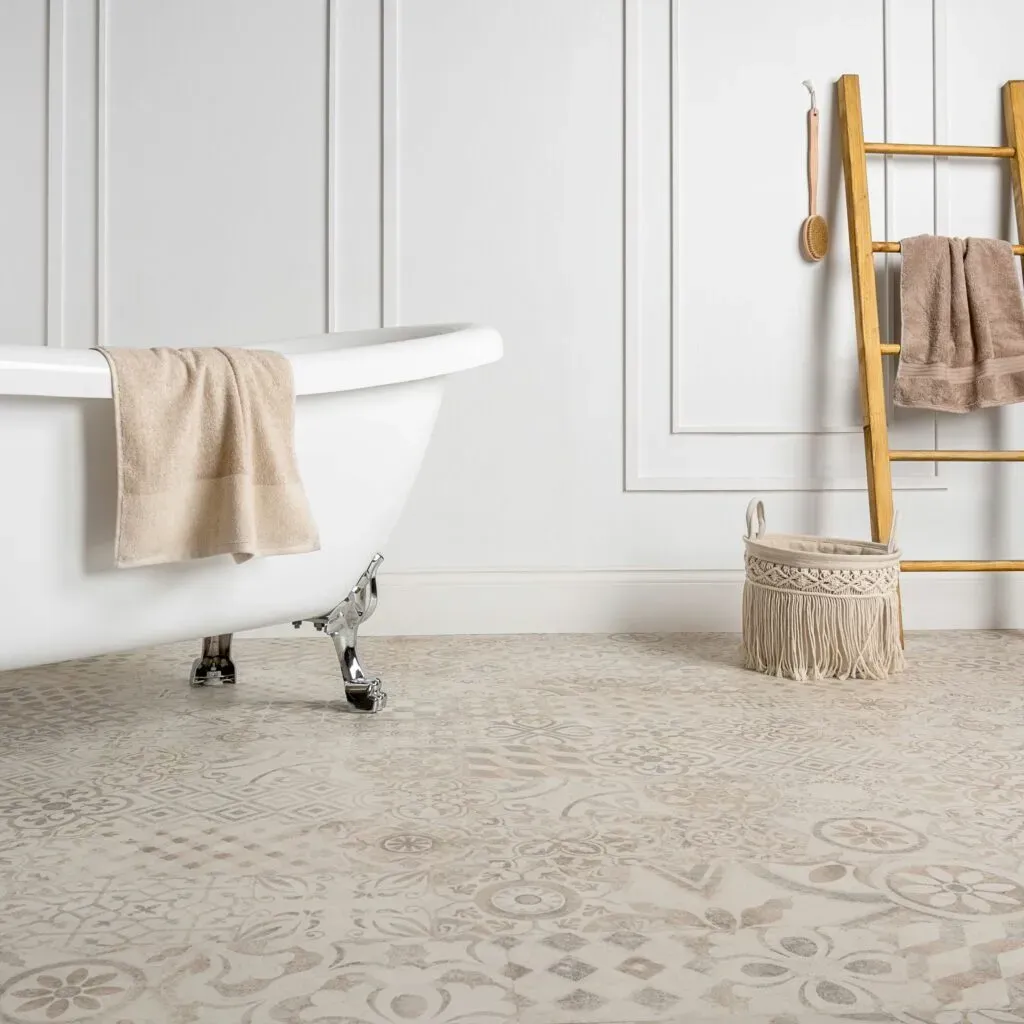
Luxury Vinyl Tile (LVT) flooring and laminate flooring differ in water resistance, durability, cost, and usage areas, with Luxury Vinyl Flooring offering waterproof performance and long-term stability, while laminate flooring provides a lower-cost option suited to dry indoor spaces.
Luxury Vinyl Flooring resists water, stains, and heavy use, which supports kitchens, bathrooms, and high-traffic areas. Laminate flooring resists scratches but absorbs moisture, which limits use to dry rooms.
Vinyl flooring tile provides softer comfort, lower noise, and wider design options, while laminate flooring offers mainly wood-effect styles with harder surfaces.
Luxury Vinyl Tile (LVT) flooring installs faster and lasts longer, while laminate flooring costs less upfront but requires more careful maintenance.
What Is LVT Flooring?

Luxury Vinyl Tile (LVT) flooring is a multi-layer synthetic floor covering made from polyvinyl chloride (PVC) compounds that replicate wood, stone, or ceramic visuals while delivering 100% waterproof performance, high wear resistance, and dimensional stability across residential and commercial environments.
What Is Laminate Flooring?
Laminate flooring is a layered floor made from compressed wood fibre (HDF) with a printed design layer and a strong top coating, designed to look like real wood or stone while providing good scratch resistance and easy maintenance for indoor spaces.
What Are The Main Differences Between LVT And Laminate Flooring?
Luxury Vinyl Tile (LVT) flooring and laminate flooring differ in water resistance, material structure, durability, comfort, and installation, with Luxury Vinyl Flooring using a fully waterproof PVC core and laminate flooring using a wood-based core that reacts to moisture.
The main differences between Luxury Vinyl Flooring and laminate flooring are given below:
- Water Resistance: Luxury Vinyl Tiles are 100% waterproof and handle spills easily, while laminate flooring resists water for 24–72 hours but absorbs moisture after longer exposure and may swell.
- Material Structure: Luxury Vinyl Tile (LVT) flooring uses plastic-based layers such as PVC, while laminate flooring uses compressed wood fibres called HDF.
- Durability: Vinyl flooring tile resists scratches, dents, and heavy use with a protective wear layer, while laminate flooring resists scratches well but chips more easily on edges.
- Comfort: Luxury Vinyl Flooring feels softer and warmer underfoot due to flexible or rigid core layers, while laminate flooring feels harder and cooler because of dense wood construction.
- Installation: Luxury Vinyl Tiles install using click-fit or glue-down methods, while laminate flooring uses a click-lock system that floats over the subfloor.
- Thickness: Luxury Vinyl Tile (LVT) flooring ranges from 2mm to 6mm, while laminate flooring ranges from 7mm to 12mm, which affects floor height and sound.
- Sound: Luxury Vinyl Flooring reduces noise by up to 20 dB with built-in backing, while laminate flooring creates more sound when walked on without underlay.
Is LVT Flooring More Durable Than Laminate?
Luxury Vinyl Tile (LVT) flooring is more durable than laminate flooring because Luxury Vinyl Flooring is fully waterproof, resists dents and heavy use better, and keeps shape longer, while laminate flooring scratches well but gets damaged when water enters the wood-based core.
The durability differences between Luxury Vinyl Flooring and laminate flooring are given below:
- Structure Strength: Luxury Vinyl Tile (LVT) flooring uses strong PVC layers with a protective top layer, while laminate flooring uses compressed wood that weakens over time.
- Water Resistance: Luxury Vinyl Tiles stay stable in water with absorption below 0.1%, while laminate flooring absorbs water after 24–72 hours and starts swelling.
- Impact Resistance: Luxury Vinyl Flooring absorbs pressure and avoids dents, while laminate flooring feels hard but chips more easily on edges.
- Scratch Resistance: Vinyl flooring tile resists scratches from shoes and furniture, while laminate flooring resists light scratches but shows deeper marks under pressure.
- Lifespan: Luxury Vinyl Tile (LVT) flooring lasts around 10–20 years, while laminate flooring lasts around 8–15 years depending on use and moisture.
What Are The Benefits Of LVT Flooring?
Luxury Vinyl Tile (LVT) flooring provides waterproof performance, high durability, easy maintenance, comfort underfoot, and wide design flexibility, which makes Luxury Vinyl Flooring suitable for kitchens, bathrooms, and high-traffic living areas.
The benefits of Luxury Vinyl Flooring are given below:
- Waterproof Performance: Luxury Vinyl Tiles resist water completely with absorption below 0.1%, which prevents swelling and damage in wet areas.
- High Durability: Luxury Vinyl Tile (LVT) flooring uses a 0.2mm–0.7mm wear layer that protects against scratches, dents, and daily foot traffic.
- Easy Maintenance: Vinyl flooring tile supports simple cleaning with sweeping and damp mopping without risk of water damage.
- Comfort Underfoot: Luxury Vinyl Flooring provides a softer and warmer surface compared to hard flooring materials.
- Noise Reduction: Luxury Vinyl Tiles reduce sound transmission by up to 20 dB with built-in backing layers.
- Design Flexibility: Luxury Vinyl Tile (LVT) flooring includes wood, stone, marble, and patterned designs with multiple formats such as planks and tiles.
- Installation Ease: Luxury Vinyl Flooring installs with click-fit or glue-down systems using lighter boards and simple cutting methods.
What Are The Drawbacks Of LVT Flooring?
Luxury Vinyl Tile (LVT) flooring has drawbacks including higher upfront cost than laminate, sensitivity to subfloor unevenness, potential surface damage under sharp objects, and limited repair options compared to natural materials.
The drawbacks of Luxury Vinyl Flooring are given below:
- Higher Upfront Cost: Luxury Vinyl Tiles cost between £20–£50 per m², which is higher than laminate flooring in most cases.
- Subfloor Preparation Requirement: Luxury Vinyl Tile (LVT) flooring requires a smooth and level surface within 3mm over 2 metres, which increases preparation time.
- Scratch Sensitivity: Vinyl flooring tile resists general wear but shows marks from sharp objects such as heavy furniture edges or pet claws under pressure.
- Repair Limitation: Luxury Vinyl Flooring uses plank or tile systems where damaged sections require full plank replacement rather than surface refinishing.
- Temperature Sensitivity: Luxury Vinyl Tiles expand slightly under temperature changes, which requires expansion gaps during installation.
- Lower Thickness Feel: Luxury Vinyl Tile (LVT) flooring ranges between 2mm and 6mm, which provides less solid feel compared to thicker flooring materials.
What Are The Benefits Of Laminate Flooring?

Laminate flooring provides strong scratch resistance, low cost, realistic wood-look designs, and simple installation, which makes laminate flooring suitable for bedrooms and living areas with low moisture exposure.
The benefits of laminate flooring are given below:
- Low Cost: Laminate flooring costs between £10–£30 per m², which supports budget-friendly renovations.
- Scratch Resistance: Laminate flooring uses a hard wear layer that resists marks from shoes, furniture, and daily use.
- Wood-Look Design: Laminate flooring replicates natural wood such as oak, walnut, and grey timber with high visual accuracy.
- Easy Installation: Laminate flooring uses click-lock systems that allow floating floor installation without adhesives.
- Wide Availability: Laminate flooring is available in multiple plank sizes and finishes for different interior styles.
- Surface Durability: Laminate flooring maintains appearance under light to moderate foot traffic in dry indoor spaces
What Are The Drawbacks Of Laminate Flooring?
Laminate flooring has drawbacks including low water resistance, swelling risk, higher noise levels, harder underfoot feel, and limited repair options due to the wood-based HDF core structure.
The drawbacks of laminate flooring are given below:
- Low Water Resistance: Laminate flooring resists spills for 24–72 hours but absorbs moisture after longer exposure, which leads to swelling and damage.
- Swelling Risk: Laminate flooring expands up to 18% under moisture exposure, which affects plank shape and joint stability.
- Higher Noise Levels: Laminate flooring produces more sound when walked on, especially without underlay.
- Hard Surface Feel: Laminate flooring feels harder and cooler underfoot due to dense wood construction.
- Repair Limitation: Laminate flooring boards require replacement when damaged because surface refinishing is not possible.
- Underlay Requirement: Laminate flooring requires underlay in most installations, which adds extra cost and installation steps.
Which Should You Choose For Your Space? Room By Room
Luxury Vinyl Tile (LVT) flooring suits wet and high-traffic areas, while laminate flooring suits dry and low-moisture rooms, with selection based on water exposure, foot traffic, and maintenance requirements in each space.
The room-by-room flooring selection is given below:
- Kitchen Flooring: Choose Luxury Vinyl Flooring because waterproof performance handles spills, grease, and daily cleaning without damage.
- Bathroom Flooring: Choose Luxury Vinyl Tiles because 100% waterproof structure prevents swelling and maintains safety in wet conditions.
- Living Room Flooring: Choose laminate flooring for cost-effective wood-look design in dry areas, while LVT suits high-traffic households.
- Bedroom Flooring: Choose laminate flooring for comfort and lower cost in low-moisture environments.
- Hallway Flooring: Choose Luxury Vinyl Tile (LVT) flooring because high foot traffic requires strong wear resistance and impact durability.
- Utility Room Flooring: Choose vinyl flooring tile because frequent water exposure requires waterproof protection and easy maintenance.
Which Flooring Handles Heavy Foot Traffic Better?
Luxury Vinyl Tile (LVT) flooring handles heavy foot traffic better than laminate flooring because Luxury Vinyl Flooring uses a flexible or rigid PVC core with a wear layer up to 0.7mm that reduces dents, absorbs pressure, and maintains surface stability under repeated use.
The performance differences between Luxury Vinyl Flooring and laminate flooring under heavy foot traffic are given below:
- Wear Layer Strength: Luxury Vinyl Tile (LVT) flooring uses a 0.2mm–0.7mm wear layer, while laminate flooring uses a thinner protective layer.
- Impact Handling: Luxury Vinyl Tiles absorb foot pressure and furniture weight, while laminate flooring transfers impact directly to the surface.
- Surface Stability: Vinyl flooring tile keeps shape under continuous use, while laminate flooring expands and contracts with humidity.
- Long-Term Performance: Luxury Vinyl Flooring performs better in busy areas such as hallways and kitchens, while laminate flooring wears faster.
Is LVT Flooring Waterproof?
Luxury Vinyl Tile (LVT) flooring is 100% waterproof because Luxury Vinyl Flooring uses a PVC-based core that does not absorb water, with water absorption rates below 0.1%, which prevents swelling, warping, and structural damage in wet areas.
Is Laminate Flooring Waterproof Or Water-Resistant?
Laminate flooring is water-resistant for a limited time but not waterproof because laminate flooring uses a high-density fibreboard (HDF) core that absorbs moisture after 24–72 hours, which leads to swelling, edge lifting, and permanent structural damage.
Which Flooring Is Better For Kitchens And Bathrooms?
Luxury Vinyl Tile (LVT) flooring is better for kitchens and bathrooms because Luxury Vinyl Flooring provides 100% waterproof performance, stable structure under moisture, and slip-resistant surfaces, while laminate flooring absorbs water and shows swelling and joint damage in wet conditions.
The suitability differences between Luxury Vinyl Flooring and laminate flooring in wet areas are given below:
- Water Performance : Luxury Vinyl Tiles resist water completely with absorption below 0.1%, while laminate flooring absorbs moisture after 24–72 hours and expands.
- Structural Stability: Luxury Vinyl Tile (LVT) flooring maintains shape under humidity and spills, while laminate flooring changes shape due to HDF core expansion.
- Safety: Vinyl flooring tile provides slip resistance ratings between R9 and R11, which improves grip in wet zones, while laminate flooring becomes more slippery when wet.
- Hygiene: Luxury Vinyl Flooring resists stains, mould, and bacteria growth due to non-porous surfaces, while laminate flooring joints allow moisture entry, which increases hygiene risks.
Does LVT Look More Realistic Than Laminate?
Luxury Vinyl Tile (LVT) flooring looks more realistic than laminate flooring because Luxury Vinyl Flooring uses embossed-in-register technology that aligns surface texture with printed wood or stone patterns, while laminate flooring uses printed layers with less precise texture matching.
The visual differences between Luxury Vinyl Flooring and laminate flooring are given below:
- Texture Realism: Luxury Vinyl Tiles match surface texture with design patterns, which creates a natural wood or stone feel, while laminate flooring shows less accurate texture alignment.
- Design Depth: Luxury Vinyl Tile (LVT) flooring uses multi-layer printing with deeper visual detail, while laminate flooring uses a single printed décor layer with flatter appearance.
- Finish Variation: Vinyl flooring tile includes natural variation in grain, knots, and stone veining, while laminate flooring repeats patterns more frequently across planks.
- Overall Appearance: Luxury Vinyl Flooring achieves higher visual accuracy for oak, marble, and concrete styles, while laminate flooring provides a realistic look but with less depth and texture precision.
Which Flooring Offers More Design Options?
Luxury Vinyl Tile (LVT) flooring offers more design options than laminate flooring because Luxury Vinyl Flooring is manufactured in a wider range of colours, textures, plank sizes, and tile formats, while laminate flooring design variation is limited by printed wood-based board construction.
The design differences between Luxury Vinyl Flooring and laminate flooring are given below:
- Style Variety: Luxury Vinyl Tiles include wood, stone, marble, concrete, and patterned designs, while laminate flooring mainly focuses on wood-effect styles such as oak, walnut, and grey tones.
- Format Ptions: Luxury Vinyl Tile (LVT) flooring comes in plank and tile formats such as 1219x178mm and 610x305mm, while laminate flooring mainly comes in plank formats with fewer size variations.
- Surface Finishes: Vinyl flooring tile includes matt, gloss, textured, and embossed-in-register finishes, while laminate flooring offers fewer finish types with less texture depth.
- Layout Flexibility: Luxury Vinyl Flooring supports multiple layouts such as herringbone, chevron, and tile patterns, while laminate flooring supports mostly straight or staggered plank layouts.
- Colour Range: Luxury Vinyl Tiles offer wider colour variation including light oak, dark walnut, grey stone, and concrete tones, while laminate flooring colour range remains more limited.
Is LVT Easier To Install Than Laminate?
LVT flooring is easier to install than laminate flooring because Luxury Vinyl Flooring uses lighter boards, simple click systems, and easy cutting methods, while laminate flooring uses heavier wood-based boards that need more effort to cut and lock together.
The installation differences between Luxury Vinyl Flooring Tile and laminate flooring are given below:
- Installation Method: Luxury Vinyl Tiles use click-fit or glue-down systems that connect easily, while laminate flooring uses tight click-lock systems that need more force to join.
- Cutting Process: Luxury Vinyl Tile (LVT) flooring cuts with a simple knife in many cases, while laminate flooring needs a saw because of the hard wood core.
- Weight Handling: Vinyl flooring tile boards feel lighter and easier to carry, while laminate flooring boards feel heavier due to dense HDF material.
- Fitting Flexibility: Luxury Vinyl Flooring adjusts easily around corners and edges, while laminate flooring needs careful measuring and alignment.
- Installation Time: Luxury Vinyl Tile (LVT) flooring installs faster because of simple handling and cutting, while laminate flooring takes more time due to weight and locking pressure.
Which Flooring Requires Underlay?
Laminate flooring requires underlay in most installations to support stability, reduce noise, and protect the HDF core, while Luxury Vinyl Tile (LVT) flooring sometimes includes built-in backing and does not always need separate underlay depending on product type.
The underlay differences between Luxury Vinyl Flooring and laminate flooring are given below:
- Underlay Requirement: Laminate flooring uses underlay in almost all installations to improve support and reduce impact sound, while LVT may include pre-attached underlay in many modern products.
- Sound Reduction: Laminate flooring depends on underlay to reduce noise by 15–20 dB, while LVT with built-in backing reduces sound without extra layers.
- Floor Protection: Laminate underlay protects against minor subfloor imperfections and moisture vapour, while LVT relies on rigid or flexible core stability.
- Installation Setup: Laminate flooring needs underlay as a separate step before installation, while LVT simplifies installation when backing is already attached.
Can LVT Or Laminate Be Installed Over Existing Floors?
Luxury Vinyl Tile (LVT) flooring and laminate flooring can be installed over existing floors if the surface is flat, clean, and dry, while uneven surfaces or soft materials reduce stability and damage locking systems over time.
The installation conditions over existing floors are given below:
- Check Surface Condition: Install over tiles, concrete, or vinyl if the surface remains level within 3mm over 2 metres, while uneven areas require levelling before fitting.
- Suitability: LVT installs over more surfaces including tiles and old vinyl due to flexible or rigid cores, while laminate needs a more stable and even base.
- Avoid Soft Flooring: Do not install over carpet or cushioned flooring because movement affects joint locking and surface stability.
- Height Impact: Both flooring types add height between 2mm and 12mm, which affects doors, skirting, and transitions between rooms.
- Moisture Levels: Install both flooring types over dry subfloors, while moisture presence under the surface increases long-term damage risk.
Which Flooring Works Better With Underfloor Heating?
Luxury Vinyl Tile (LVT) flooring works better with underfloor heating because LVT transfers heat efficiently through thin PVC layers and maintains stable shape under temperature changes, while laminate flooring uses a thicker wood-based core that slows heat transfer and reacts to heat expansion.
The performance differences with underfloor heating are given below:
- Heat Transfer: LVT allows faster heat flow due to thickness between 2mm and 6mm, while laminate flooring thickness between 7mm and 12mm reduces heat efficiency.
- Temperature Stability: LVT remains stable under temperature changes without expansion gaps increasing, while laminate flooring expands and contracts due to HDF core sensitivity.
- Maximum Temperature: LVT supports surface temperatures up to 27°C, while laminate flooring also supports similar limits but shows higher expansion risk near that range.
- Efficiency: LVT improves heating response time and energy efficiency, while laminate flooring slows heating response due to denser structure.
Is LVT Easier To Maintain Than Laminate?
Luxury Vinyl Tile (LVT) flooring is easier to maintain than laminate flooring because LVT resists water, stains, and dirt with a non-porous PVC surface, while laminate flooring uses a wood-based core that requires careful cleaning to prevent moisture damage.
The maintenance differences between Luxury Vinyl Flooring and laminate flooring are given below:
- Cleaning Process: LVT cleans with simple sweeping and damp mopping, while laminate flooring needs dry or slightly damp cleaning to avoid water exposure.
- Stain Resistance: Luxury Vinyl Tiles resist spills such as food, oil, and liquids without marking, while laminate flooring absorbs stains through joints over time.
- Water Care: LVT handles regular mopping without damage, while laminate flooring gets damaged if excess water reaches the HDF core.
- Scratch Care: Vinyl flooring tile hides minor scratches due to textured surfaces, while laminate flooring shows surface wear more clearly under heavy use.
- Long-Term Upkeep: LVT keeps appearance with low effort over time, while laminate flooring needs more careful handling to maintain condition.
Which Flooring Is More Resistant To Damage From Pets And Children?
Luxury Vinyl Tile (LVT) flooring is more resistant to damage from pets and children because LVT combines a flexible or rigid PVC core with a protective wear layer that absorbs impact, resists scratches, and blocks moisture, while laminate flooring scratches well but chips and swells under stress and spills.
The resistance differences between Luxury Vinyl Flooring and laminate flooring are given below:
- Scratch Resistance: LVT resists scratches from pet claws and toys through a 0.2mm–0.7mm wear layer, while laminate flooring resists light scratches but shows deeper marks under repeated pressure.
- Impact Resistance: Luxury Vinyl Tiles absorb drops from toys and furniture without denting easily, while laminate flooring chips on edges under sudden impact.
- Water Resistance: LVT handles spills, pet accidents, and moisture without damage, while laminate flooring absorbs liquid and swells over time.
- Comfort And Safety: Vinyl flooring tile provides a softer and warmer surface that reduces injury risk during falls, while laminate flooring feels harder underfoot.
- Long-Term Durability: LVT maintains condition under daily activity from pets and children, while laminate flooring shows faster wear in high-use environments.
Is LVT More Expensive Than Laminate?
Luxury Vinyl Tile (LVT) flooring is more expensive than laminate flooring in most cases because LVT uses multi-layer PVC construction with waterproof performance and higher durability, while laminate flooring uses a wood-based HDF core with lower material and production cost.
The cost differences between Luxury Vinyl Flooring and laminate flooring are given below:
- Material Cost: LVT uses PVC layers and protective coatings, which increase production cost, while laminate flooring uses compressed wood fibres, which lowers base cost.
- Price Range: LVT typically costs between £20–£50 per m², while laminate flooring ranges between £10–£30 per m² depending on thickness and quality.
- Installation Cost: LVT may reduce labour cost due to easier cutting and fitting, while laminate flooring may increase installation time due to heavier boards.
- Long-Term Value: LVT lasts between 10–20 years with low maintenance, while laminate flooring lasts between 8–15 years with higher care needs.
- Replacement Cost: LVT reduces replacement frequency due to waterproof durability, while laminate flooring may need earlier replacement in moisture-prone areas.
Which Flooring Offers Better Long-Term Value?
Luxury Vinyl Tile (LVT) flooring offers better long-term value than laminate flooring because LVT lasts longer, resists water damage, and requires lower maintenance, while laminate flooring has lower upfront cost but higher risk of replacement due to moisture and wear.
The long-term value differences between Luxury Vinyl Flooring and laminate flooring are given below:
- Lifespan: LVT lasts between 10–20 years in residential use, while laminate flooring lasts between 8–15 years depending on moisture exposure and daily wear.
- Maintenance Cost: Luxury Vinyl Flooring requires simple cleaning with minimal upkeep cost, while laminate flooring needs more careful maintenance to avoid water damage.
- Damage Risk: Luxury Vinyl Tiles resist water, dents, and stains, which reduces repair frequency, while laminate flooring shows swelling and edge damage over time.
- Replacement Frequency: Vinyl flooring tile reduces need for early replacement due to stable structure, while laminate flooring may require earlier replacement in high-moisture areas.
- Overall Investment: LVT provides higher durability and performance over time, while laminate flooring offers lower initial cost but reduced long-term efficiency.
When Should Homeowners Choose LVT Flooring?
Homeowners choose Luxury Vinyl Tile (LVT) flooring when spaces require waterproof performance, high durability, easy maintenance, and design flexibility, especially in areas with moisture, heavy foot traffic, or daily wear from pets and children.
The main situations for choosing Luxury Vinyl Flooring are given below:
- Choose For Wet Areas: Install Luxury Vinyl Tiles in kitchens, bathrooms, and utility rooms where water exposure remains frequent.
- Choose For Busy Homes: Use Luxury Vinyl Tile (LVT) flooring in hallways and living areas with high foot traffic and daily movement.
- Choose For Easy Cleaning: Select vinyl flooring tile when simple sweeping and mopping are required without risk of water damage.
- Choose For Comfort: Prefer Luxury Vinyl Flooring where a softer and warmer surface improves walking comfort and reduces impact.
- Choose For Design Variety: Use Luxury Vinyl Tiles when multiple styles such as wood, stone, or patterned finishes are required for interior design flexibility.
- Choose For Long-Term Use: Install Luxury Vinyl Tile (LVT) flooring when durability between 10–20 years supports long-term value.
When Should Homeowners Choose Laminate Flooring?
Homeowners choose laminate flooring when spaces require low upfront cost, strong scratch resistance, and a natural wood-look finish in dry areas, while avoiding moisture-prone environments where the wood-based core may swell and reduce long-term performance.
The main situations for choosing laminate flooring are given below:
- Choose For Dry Areas: Install laminate flooring in bedrooms and living rooms where moisture levels remain low and stable.
- Choose For Budget Projects: Use laminate flooring when cost ranges between £10–£30 per m² support affordable renovations.
- Choose for scratch resistance: Select laminate flooring in spaces with light to moderate use where surface hardness reduces visible scratches.
- Choose For Wood Appearance: Prefer laminate flooring when realistic oak, walnut, or timber visuals match interior design requirements.
- Choose For Quick Upgrades: Install laminate flooring with click-lock systems for simple floating floor setups over prepared subfloors.
- Choose For Temporary Solutions: Use laminate flooring when shorter lifespan between 8–15 years aligns with renovation plans.
Final Verdict
Luxury Vinyl Tile (LVT) flooring provides better overall performance than laminate flooring in durability, waterproof protection, comfort, and long-term value, while laminate flooring remains a cost-effective option for dry areas with lower moisture exposure.
Luxury Vinyl Flooring performs reliably in kitchens, bathrooms, and high-traffic areas due to waterproof PVC construction and strong wear layers. Laminate flooring suits bedrooms and living rooms where moisture remains low and stable.
Vinyl flooring tile delivers softer underfoot comfort, lower noise, and wider design flexibility, while laminate flooring focuses on wood-effect visuals with harder surfaces.
Flooring selection depends on environment, usage, and budget, with Luxury Vinyl Tile (LVT) flooring supporting long-term performance and laminate flooring supporting short-term cost efficiency.

Here at Tile Mountain, we not only have a huge range of tiles to suit every purpose, we also have a wealth of tiling knowledge gained from over 30 years in the tile industry, (which we’ll do or best to share with you across these very pages).
Whether you’re looking for the perfect tiles for your next home improvement project, are searching for some style inspiration, or simply need a bit of help and advice, you’re in the right place.