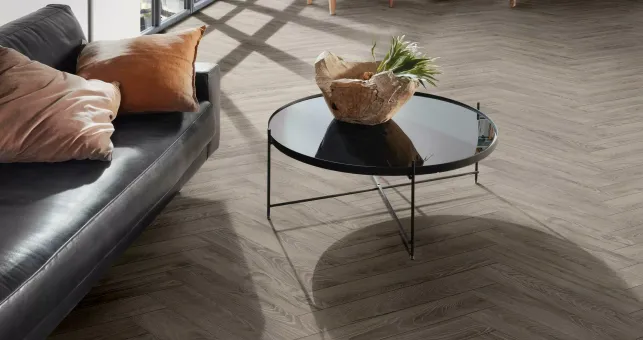
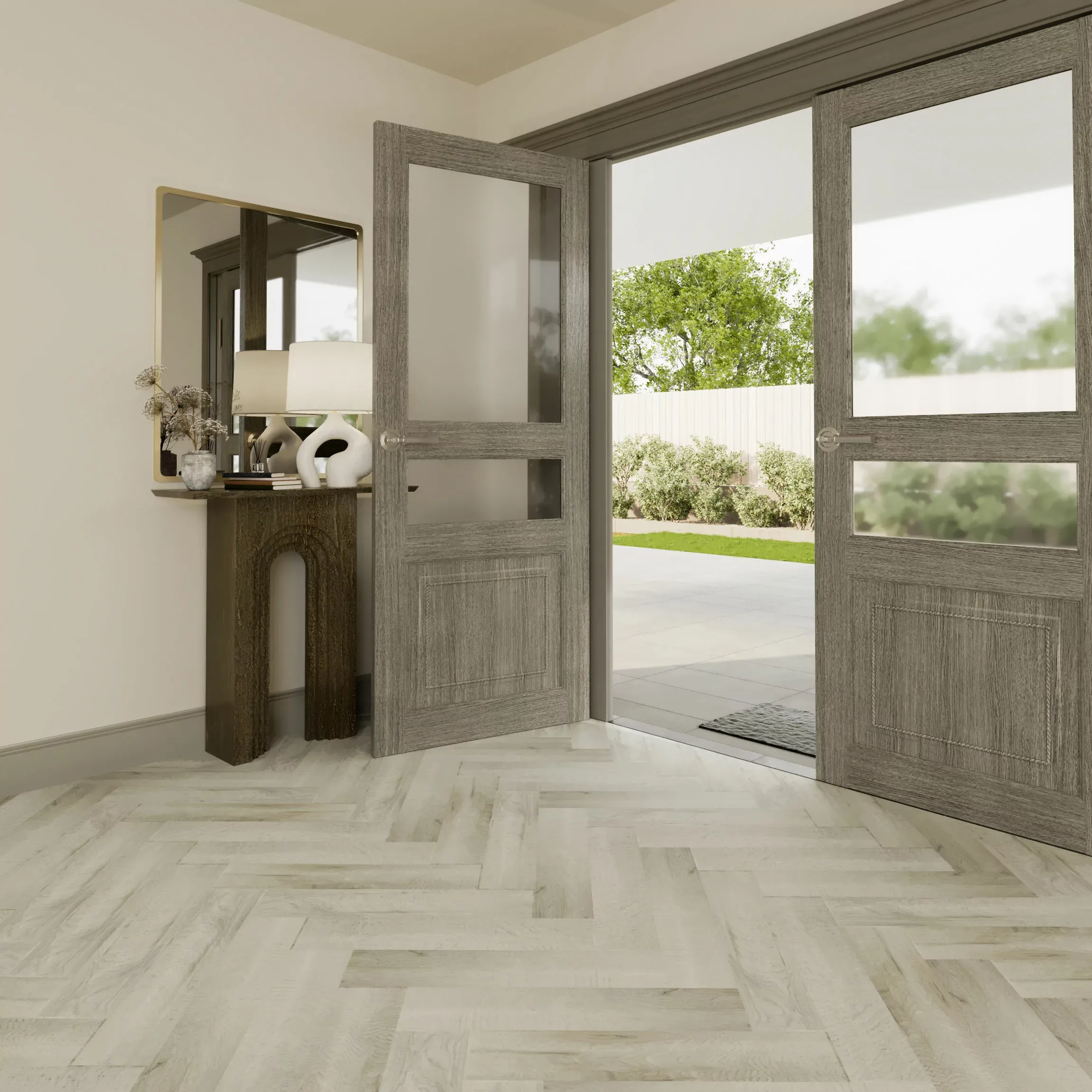
LVT herringbone flooring uses a zigzag pattern with strong vinyl layers, which creates a floor that looks like real wood while staying waterproof, durable, and easy to clean. The surface handles water and daily use, which makes the flooring suitable for kitchens, bathrooms, living rooms, and hallways.
The herringbone design forms a V-shape by placing planks at right angles, which adds more detail than straight flooring and helps rooms look wider. Different types such as glue-down and click systems change how the flooring is fitted and used.
Key benefits include scratch resistance, simple cleaning, and long-lasting performance. Design choices such as wood looks, colours, and plank sizes help match different room styles.
Modern homes use this flooring because the pattern looks stylish and the material stays strong during everyday use, which supports both design and practicality.
What Is LVT Herringbone Flooring?

LVT herringbone flooring is a luxury vinyl floor where rectangular planks are arranged in a zigzag pattern at 90-degree angles, forming a repeating V-shape design that combines realistic wood appearance with waterproof, durable, and stable flooring performance.
How Does Herringbone Pattern Differ From Straight Lay Flooring?
Herringbone pattern flooring places planks in a zigzag V-shape using 90-degree angles, while straight lay flooring places planks in one straight direction, creating a simple and flat layout with less visual detail and movement.
The main differences between herringbone pattern flooring and straight lay flooring are:
- Pattern Shape: Herringbone pattern flooring forms a zigzag V-shaped layout, while straight lay flooring forms a straight-line layout.
- Plank Direction: Herringbone pattern flooring changes direction at every plank joint, while straight lay flooring runs in one consistent direction.
- Visual Impact: Herringbone pattern flooring adds more detail and movement, while straight lay flooring creates a simple and clean look.
- Installation Method: Herringbone pattern flooring requires precise alignment and more cuts, while straight lay flooring installs faster with fewer adjustments.
- Room Effect: Herringbone pattern flooring can make narrow rooms appear up to 10–15% wider, while straight lay flooring maintains natural room proportions.
What Are The Key Layers In LVT Herringbone Flooring?
LVT herringbone flooring has four main layers: a top layer that protects the surface, a design layer that shows wood patterns, a strong core layer for support, and a bottom layer that keeps the plank stable on the floor.
The key layers in LVT herringbone flooring are:
- Wear Layer: Protects the surface from scratches, stains, and daily walking, usually between 0.3mm and 0.7mm thick.
- Design Layer: Shows realistic wood looks such as oak, walnut, and ash using printed images.
- Core Layer: Gives strength and keeps each plank firm, often made from SPC or WPC materials.
- Base Layer: Supports the plank and helps keep the flooring steady on the subfloor.
LVT herringbone flooring uses these layers to stay strong, resist water, and keep the shape stable during daily use.
What Types Of LVT Herringbone Flooring Are Available?
LVT herringbone flooring is available in three main types: glue-down LVT for strong fixed installation, click-lock LVT for easy floating installation, and rigid core LVT for higher stability using SPC or WPC construction in herringbone plank formats.
The types of LVT herringbone flooring are:
- Glue-Down LVT Herringbone: Uses adhesive to fix each plank directly to the subfloor, which creates a firm and long-lasting floor with minimal movement.
- Click-Lock LVT Herringbone: Uses a locking system where planks connect without glue, which allows faster installation and easier replacement.
- SPC Rigid Core LVT Herringbone: Uses a stone plastic composite core, which provides high strength, dent resistance, and better performance in high-traffic areas.
- WPC Rigid Core LVT Herringbone: Uses a wood plastic composite core, which provides a softer feel underfoot and improved comfort while maintaining stability.
How Is LVT Herringbone Flooring Made?
LVT herringbone flooring is made by pressing multiple vinyl layers together under heat and pressure, printing realistic wood designs on the surface, cutting planks into precise rectangular shapes, and finishing edges to allow 90-degree zigzag herringbone installation.
The manufacturing process of LVT herringbone flooring includes:
- Mix Raw Materials: Combine PVC resin, stabilisers, and additives, which form the base vinyl material.
- Press Layers Together: Compress wear layer, design layer, core layer, and base layer under heat, which creates a strong multi-layer plank.
- Print Wood Design: Apply high-definition wood patterns such as oak or walnut, which gives a natural look.
- Cut Plank Shape: Cut planks into sizes between 100mm–150mm wide and 400mm–600mm long, which supports herringbone layout.
- Finish Edges: Shape edges for click-lock or glue-down systems, which allows correct plank connection at 90 degrees.
- Quality Check: Inspect thickness, surface strength, and alignment, which ensures consistent product performance.
What Are The Advantages Of LVT Herringbone Flooring?
LVT herringbone flooring delivers six key advantages: waterproof structure, high durability, realistic wood design, rigid core stability, low maintenance cleaning, and a zigzag layout that increases visual depth and improves perceived room width by up to 10–15%.
The advantages of LVT herringbone flooring are:
- Waterproof Structure: LVT herringbone flooring resists water penetration, which supports use in kitchens, bathrooms, and high-moisture areas.
- High Durability: LVT herringbone flooring uses a wear layer between 0.3mm and 0.7mm, which protects against scratches, dents, and daily foot traffic.
- Realistic Wood Design: LVT herringbone flooring includes a printed layer that replicates wood types such as oak, walnut, and ash with detailed grain patterns.
- Rigid Core Stability: LVT herringbone flooring uses SPC or WPC core materials, which maintain plank shape and reduce expansion under temperature change.
- Low Maintenance Cleaning: LVT herringbone flooring supports regular sweeping and damp mopping, which removes dirt and surface marks efficiently.
- Visual Layout Impact: Herringbone pattern arrangement forms a zigzag V-shape, which increases floor movement and improves spatial perception in narrow rooms.
What Are the Limitations of Herringbone LVT Flooring?
LVT herringbone flooring has five main limitations: higher installation complexity, increased fitting time, higher material waste during cutting, subfloor preparation requirements, and higher total installation cost compared to straight lay vinyl flooring.
The limitations of LVT herringbone flooring are:
- Higher Installation Complexity: LVT herringbone flooring requires precise 90-degree plank alignment, which increases layout difficulty compared to straight plank installation.
- Increased Fitting Time: LVT herringbone flooring installation takes 20–40% longer due to pattern planning, angle cuts, and alignment checks.
- Higher Material Waste: LVT herringbone flooring produces 5–10% more waste due to frequent cutting and pattern matching.
- Subfloor Preparation Requirements: LVT herringbone flooring needs a level subfloor within 3mm over 2 metres, which increases preparation effort before installation.
- Higher Total Installation Cost: LVT herringbone flooring increases labour cost due to longer installation time and skilled fitting requirements.
How Durable Is LVT Herringbone Flooring In High-Traffic Areas?
LVT herringbone flooring provides high durability in high-traffic areas due to a wear layer between 0.3mm and 0.7mm, which protects against scratches, dents, and daily foot movement while maintaining surface integrity and pattern alignment over long-term use.
Luxury vinyl herringbone flooring uses a multi-layer structure that supports strength under frequent use. The wear layer acts as the main защитive surface, while the core layer maintains plank stability.
The durability features of LVT herringbone flooring in high-traffic areas are:
- Wear Layer Protection: LVT herringbone flooring includes a wear layer up to 0.7mm, which reduces visible scratches and surface damage from heavy foot traffic.
- Impact Resistance: LVT herringbone flooring uses SPC or WPC core materials, which absorb pressure and reduce dent formation from furniture and movement.
- Surface Stability: LVT herringbone flooring maintains plank position and shape under repeated use, which prevents lifting or shifting.
- Stain Resistance: LVT herringbone flooring resists stains from spills, dirt, and everyday use, which supports easy cleaning.
- Long Lifespan: LVT herringbone flooring lasts between 10 to 20 years in residential high-traffic areas when maintained with regular cleaning.
Is LVT Herringbone Flooring Waterproof?
LVT herringbone flooring is fully waterproof because the vinyl construction uses non-porous materials that block water absorption, which allows the floor to resist spills, moisture, and humidity without swelling, warping, or surface damage during normal indoor use.
LVT herringbone flooring uses PVC-based layers that prevent water penetration. Each plank maintains shape and structure when exposed to moisture.
The waterproof features of LVT herringbone flooring are:
- Non-Porous Material Structure: LVT herringbone flooring uses vinyl layers that do not absorb water, which prevents swelling and warping.
- Sealed Surface Protection: LVT herringbone flooring includes a wear layer that blocks water from reaching inner layers.
- Stable Core Construction: LVT herringbone flooring uses SPC or WPC cores, which maintain shape under humidity and moisture exposure.
- Moisture Area Suitability: LVT herringbone flooring supports use in kitchens, bathrooms, and utility rooms where water exposure is frequent.
Which Rooms Are Best Suited For LVT Herringbone Flooring?
LVT herringbone flooring suits kitchens, bathrooms, living rooms, bedrooms, hallways, and utility rooms because the waterproof vinyl structure, durable wear layer, and stable core support both high-traffic use and moisture-prone environments.
The best rooms for LVT herringbone flooring are:
- Kitchens: LVT herringbone flooring resists spills, grease, and daily use, which supports cooking areas.
- Bathrooms: LVT herringbone flooring blocks water absorption, which prevents swelling in wet spaces.
- Living Rooms: LVT herringbone flooring handles frequent foot traffic, which suits family areas.
- Bedrooms: LVT herringbone flooring provides a stable and comfortable surface, which suits low to medium traffic use.
- Hallways: LVT herringbone flooring supports heavy foot movement, which suits entrance and passage areas.
- Utility Rooms: LVT herringbone flooring resists water and dirt, which suits washing and storage spaces.
Is LVT Herringbone Flooring Eco-Friendly?
LVT herringbone flooring provides moderate eco-friendly performance because modern vinyl production uses low-VOC materials, recyclable components, and phthalate-free formulations, while the long lifespan of 10–20 years reduces replacement frequency and overall material waste in residential use.
The eco-friendly aspects of LVT herringbone flooring are:
- Low VOC Emissions: LVT herringbone flooring uses controlled manufacturing processes, which reduce indoor air pollutants during use.
- Phthalate-Free Composition: LVT herringbone flooring avoids harmful plasticisers, which improves indoor environmental safety.
- Long Lifespan: LVT herringbone flooring lasts 10–20 years, which reduces waste from frequent replacements.
- Recyclable Materials: LVT herringbone flooring includes recyclable vinyl content, which supports waste reduction at end of life.
- Efficient Production: LVT herringbone flooring manufacturing uses controlled energy processes, which reduces environmental impact per unit.
How Does LVT Herringbone Compare To Real Wood Parquet?
LVT herringbone flooring differs from real wood parquet by offering waterproof vinyl construction, lower maintenance, and higher stability, while real wood parquet uses natural timber, requires regular care, and reacts to moisture and temperature changes.
The comparison between LVT herringbone flooring and real wood parquet is defined below:
| Feature | LVT Herringbone Flooring | Real Wood Parquet |
| Material Structure | PVC-based layered vinyl with SPC or WPC core | Solid wood or engineered timber |
| Water Resistance | Fully waterproof and moisture-resistant | Absorbs moisture, prone to swelling and warping |
| Durability | Wear layer (0.3mm–0.7mm) protects against scratches and dents | Surface scratches easily under heavy use |
| Maintenance | Requires sweeping and damp mopping | Requires sealing, polishing, and careful cleaning |
| Installation | Click-lock or glue-down installation methods | Adhesive fixing with sanding and finishing |
| Cost | 20–40% lower total cost | Higher material and labour cost |
| Stability | Maintains shape under temperature changes | Expands and contracts with humidity |
How Does LVT Herringbone Compare To Laminate Herringbone?

LVT herringbone flooring differs from laminate herringbone by using waterproof vinyl layers that resist moisture and maintain stability, while laminate herringbone uses a wood-based core that absorbs water and performs effectively only in dry indoor environments.
The key differences between LVT herringbone flooring and laminate herringbone flooring are:
- Material Structure: LVT herringbone flooring uses PVC-based layered construction with SPC or WPC core, while laminate herringbone flooring uses high-density fibreboard (HDF) with a printed surface layer.
- Water Resistance: LVT herringbone flooring blocks water absorption, while laminate herringbone flooring allows moisture entry through joints, which causes swelling.
- Durability Performance: LVT herringbone flooring resists scratches, dents, and stains using a 0.3mm–0.7mm wear layer, while laminate herringbone flooring resists scratches but weakens under moisture exposure.
- Maintenance Requirement: LVT herringbone flooring supports damp mopping and regular cleaning, while laminate herringbone flooring requires dry cleaning with minimal water use.
- Stability: LVT herringbone flooring maintains shape under humidity and temperature changes, while laminate herringbone flooring expands or warps when exposed to moisture.
- Usage Areas: LVT herringbone flooring supports kitchens, bathrooms, and utility rooms, while laminate herringbone flooring suits living rooms and bedrooms only.
What Design Options Exist In LVT Herringbone Flooring?
LVT herringbone flooring offers five main design options: different wood looks, colour choices, plank sizes, surface textures, and layout styles, which together create different floor designs and change how a room looks and feels.
The design options in LVT herringbone flooring are:
- Wood-Effect Finishes: LVT herringbone flooring shows wood styles such as oak, walnut, ash, and pine using printed designs.
- Colour Variations: LVT herringbone flooring includes light shades like white and beige, natural shades like oak, and dark shades like brown and grey.
- Plank Size Formats: LVT herringbone flooring uses planks between 100mm and 150mm wide and 400mm to 600mm long, which changes how large or small the pattern looks.
- Surface Textures: LVT herringbone flooring comes in smooth, matt, and textured finishes, which change how the floor feels and reflects light.
- Laying Styles: LVT herringbone flooring includes standard herringbone, double herringbone, and diagonal layouts, which change the direction and pattern of the floor.
What Plank Sizes Are Used In Herringbone LVT Flooring?
Herringbone LVT flooring uses smaller rectangular planks, usually between 100mm and 150mm wide and 400mm to 600mm long, which allows the zigzag pattern to form correctly and keeps the layout neat, balanced, and easy to align during installation.
The plank sizes used in herringbone LVT flooring are:
- Width Range: Herringbone LVT flooring uses planks between 100mm and 150mm wide, which helps create a clear and detailed zigzag pattern.
- Length Range: Herringbone LVT flooring uses planks between 400mm and 600mm long, which supports proper V-shape formation.
- Thickness Range: Herringbone LVT flooring usually ranges between 4mm and 6mm thick, which provides strength and stability underfoot.
How Is LVT Herringbone Flooring Installed? Step by Step
LVT herringbone flooring is installed by preparing a flat floor, marking a centre line, placing planks at 90-degree angles to form a zigzag pattern, continuing the layout row by row, cutting edges to fit, and fixing planks using glue or click-lock systems.
The installation steps for LVT herringbone flooring are:
- Prepare Subfloor: Clean, dry, and level the floor within 3mm over 2 metres, which helps planks sit flat and stay stable.
- Mark Centre Line: Draw a straight line across the room, which guides where the pattern starts.
- Place First Planks: Set the first two planks at a right angle, which creates the first V shape.
- Build Zigzag Pattern: Continue placing planks in opposite directions, which forms the herringbone design.
- Check Alignment: Keep checking angles and edges, which keeps the pattern neat and straight.
- Cut Edge Planks: Trim planks at the edges, which helps the floor fit the room shape.
- Fix Planks: Use glue for glue-down flooring or click planks together for click systems, which hold the floor in place.
What Subfloor Preparation Is Required For LVT Herringbone Flooring?
LVT herringbone flooring requires a clean, dry, and level subfloor with a maximum tolerance of 3mm over 2 metres, which ensures correct plank alignment, prevents movement, and supports long-term stability of the zigzag pattern.
The subfloor preparation steps for LVT herringbone flooring are:
- Clean Surface: Remove dust, dirt, grease, and debris, which allows proper plank bonding and smooth installation.
- Level Floor: Check floor flatness within 3mm over 2 metres, which prevents uneven planks and pattern distortion.
- Dry Subfloor: Ensure moisture levels remain low, which avoids damage and adhesive failure.
- Repair Imperfections: Fill cracks, holes, and gaps, which creates a smooth and even base.
- Check Surface Type: Confirm compatibility with concrete, plywood, or existing smooth flooring, which supports correct installation method.
Is LVT Herringbone Flooring Suitable For Underfloor Heating?
LVT herringbone flooring is suitable for underfloor heating because the vinyl layers conduct heat efficiently and remain stable under temperature changes, with most systems supporting surface temperatures up to 27°C without causing expansion, warping, or structural damage.
LVT herringbone flooring works with both electric and water-based underfloor heating systems. The layered construction supports consistent heat transfer across the floor surface.
The key factors for using LVT herringbone flooring with underfloor heating are:
- Heat Compatibility: LVT herringbone flooring transfers heat evenly, which supports efficient room heating.
- Temperature Limit: LVT herringbone flooring performs best below 27°C, which prevents overheating and material stress.
- Stable Core Structure: LVT herringbone flooring uses SPC or WPC cores, which maintain plank shape under heat exposure.
- Gradual Heating Control: Increase temperature slowly during operation, which protects the floor from sudden expansion.
How Much Does LVT Herringbone Flooring Cost?
LVT herringbone flooring costs between £19.95 and £42.99 per square metre for materials, while total installed cost ranges from £40 to £90 per square metre depending on installation complexity, plank quality, and subfloor preparation requirements.
The cost factors for LVT herringbone flooring are:
- Material Cost: LVT herringbone flooring starts from £19.95 per m² and reaches up to £42.99 per m² based on design, thickness, and core type.
- Installation Cost: LVT herringbone flooring fitting costs between £20 and £40 per m² due to zigzag pattern alignment and cutting requirements.
- Subfloor Preparation Cost: LVT herringbone flooring may require levelling, which adds £5 to £15 per m² depending on floor condition.
- Total Cost Range: LVT herringbone flooring combined cost reaches £40 to £90 per m² including materials and labour.
How Do You Maintain LVT Herringbone Flooring?
LVT herringbone flooring stays clean and strong with simple care such as regular sweeping, light mopping with a gentle cleaner, quick spill removal, and using floor protection, which helps prevent scratches, marks, and long-term damage.
The maintenance steps for LVT herringbone flooring are:
- Sweep Floor Regularly: Clean dust and dirt using a broom or vacuum, which helps stop scratches on the surface.
- Mop With Damp Cloth: Use a damp mop with a mild cleaner, which removes marks and keeps the floor fresh.
- Clean Spills Quickly: Wipe water, juice, or oil straight away, which stops stains and sticky patches.
- Use Floor Protection: Place soft pads under furniture and use door mats, which reduces dents and dirt coming inside.
- Avoid Strong Cleaners: Do not use rough tools or strong chemicals, which protects the top layer from damage.
What Are Common Mistakes When Installing LVT Herringbone Flooring?
LVT herringbone flooring installation mistakes include uneven floors, wrong starting lines, incorrect plank angles, no edge gaps, and rushing the pattern, which causes a messy zigzag design, loose planks, and reduced floor strength over time.
The common mistakes when installing LVT herringbone flooring are:
- Uneven Subfloor: LVT herringbone flooring placed on a bumpy floor causes gaps and lifting.
- Wrong Centre Line: LVT herringbone flooring without a straight starting line creates a crooked zigzag pattern.
- Incorrect Plank Angles: LVT herringbone flooring with wrong 90-degree placement breaks the V-shape design.
- No Expansion Gaps: LVT herringbone flooring without small gaps at edges causes pressure and movement.
- Rushing Installation: LVT herringbone flooring installed too fast leads to cutting mistakes and uneven layout.
Why Is LVT Herringbone Flooring Popular In Modern Interiors?
LVT herringbone flooring is popular in modern interiors because the zigzag pattern adds eye-catching design, the vinyl material stays strong and waterproof, and the wood-look finish gives a natural style with easy cleaning and long-lasting performance.
The reasons LVT herringbone flooring is popular in modern interiors are:
- Eye-Catching Pattern: LVT herringbone flooring uses a zigzag V-shape, which makes floors look more detailed and stylish.
- Natural Wood Look: LVT herringbone flooring shows wood styles such as oak and walnut, which creates a warm and natural feel.
- Waterproof Surface: LVT herringbone flooring blocks water, which helps in kitchens and bathrooms.
- Strong Durability: LVT herringbone flooring handles daily walking, which suits busy homes.
- Easy Cleaning: LVT herringbone flooring needs simple sweeping and mopping, which keeps the floor clean with less effort.
How Do You Choose The Right LVT Herringbone Flooring?
Choose the right LVT herringbone flooring by checking five key factors: wear layer thickness, core type, plank size, colour and design, and installation method, which together decide durability, appearance, comfort, and suitability for each room.
The steps to choose the right LVT herringbone flooring are:
- Check Wear Layer Thickness: Choose between 0.3mm and 0.7mm wear layer, which increases protection against scratches and daily use.
- Select Core Type: Choose SPC core for higher strength or WPC core for softer feel, which affects durability and comfort.
- Pick Plank Size: Choose planks between 100mm–150mm wide and 400mm–600mm long, which controls pattern size and room look.
- Choose Colour And Design: Select light, natural, or dark wood tones, which changes how the room looks and feels.
- Select Installation Method: Choose glue-down for fixed stability or click-lock for easier fitting, which affects installation time and cost.
What Are The Latest UK Trends In LVT Herringbone Flooring For 2026?
LVT herringbone flooring trends for 2026 focus on natural colours, wider planks, textured surfaces, soft colour mixing, and use in large open spaces, which match modern home styles and make rooms look bigger, warmer, and more connected.
The latest LVT herringbone flooring trends are:
- Natural Wood Colours: LVT herringbone flooring uses light oak, beige, and warm brown shades, which create a calm and natural look.
- Wider Planks: LVT herringbone flooring uses planks up to 150mm wide, which makes the zigzag pattern look bigger and clearer.
- Textured Surfaces: LVT herringbone flooring includes matt and embossed finishes, which feel more like real wood.
- Mixed Colour Shades: LVT herringbone flooring combines similar tones, which adds soft contrast and depth to the pattern.
- Open-Plan Use: LVT herringbone flooring covers large areas like kitchens and living rooms, which creates a smooth and connected floor design.
Is LVT Herringbone Flooring The Right Choice For Your Home?
LVT herringbone flooring is the right choice for homes that need waterproof performance, high durability, low maintenance, and a decorative zigzag design, which suits kitchens, bathrooms, living areas, and high-traffic spaces with consistent daily use.
The reasons LVT herringbone flooring suits a home are:
- Waterproof Performance: LVT herringbone flooring resists spills and moisture, which supports kitchens and bathrooms.
- High Durability: LVT herringbone flooring handles daily foot traffic, which suits busy homes and family areas.
- Low Maintenance: LVT herringbone flooring needs simple sweeping and mopping, which keeps cleaning easy.
- Decorative Design: LVT herringbone flooring uses a zigzag pattern, which adds style and detail to rooms.
- Room Flexibility: LVT herringbone flooring works across multiple spaces, which supports whole-home flooring design.
Why Should You Buy LVT Herringbone Flooring From Tile Mountain?
Tile Mountain makes buying LVT herringbone flooring simple with low prices from £19.95 to £42.99 per m², free samples, Pay in 3 options, fast free delivery over £299, and over 39,000 positive reviews, which helps customers choose with confidence.
The reasons to choose Tile Mountain for LVT herringbone flooring are:
- Free Sample: Tile Mountain sends free samples, which helps check colour and quality before buying.
- Pay In 3 Option: Tile Mountain allows payment in three parts, which makes spending easier to manage.
- Fast Free Delivery Over £299: Tile Mountain delivers quickly with no delivery cost on orders above £299, which saves money.
- Over 39,000 Positive Reviews: Tile Mountain has over 39,000 reviews, which shows strong customer trust and satisfaction.
Tile Mountain combines easy buying options with trusted service, which supports a smooth and simple purchase process for LVT herringbone flooring.
Final Verdict
LVT herringbone flooring combines a zigzag pattern with durable vinyl construction, which creates a floor that looks like real wood while staying waterproof, stable, and easy to maintain. The layered structure supports daily use, which makes the flooring suitable for kitchens, bathrooms, living rooms, and hallways.
The herringbone layout adds visual detail and can make rooms appear wider, while different types such as glue-down and click systems offer flexibility in installation. Design options such as wood styles, colours, and plank sizes allow the flooring to match different interiors.
Strong durability, low maintenance, and moisture resistance support long-term performance, while proper installation and subfloor preparation ensure pattern accuracy and stability. This combination of design and function supports use in modern homes with both style and practicality.
Frequently Asked Questions About LVT Herringbone Flooring:
Is LVT Herringbone Flooring Good For Small Rooms?
LVT herringbone flooring improves small room appearance because the zigzag pattern creates visual movement and increases perceived width by up to 10–15%, which makes compact spaces look larger and more detailed.
Does LVT Herringbone Flooring Scratch Easily?
LVT herringbone flooring resists scratches due to a wear layer between 0.3mm and 0.7mm, which protects the surface from daily foot traffic, furniture movement, and light impact.
Can LVT Herringbone Flooring Be Installed Over Existing Floors?
LVT herringbone flooring installs over existing floors such as tiles or concrete, if the surface remains smooth, clean, and level within 3mm over 2 metres, which ensures proper pattern alignment and stability.
How Long Does LVT Herringbone Flooring Last?
LVT herringbone flooring lasts between 10 and 20 years in residential settings, which depends on wear layer thickness, usage level, and regular maintenance.
Is LVT Herringbone Flooring Cold Underfoot?
LVT herringbone flooring feels warmer than stone or ceramic surfaces because the vinyl material retains room temperature and supports use with underfloor heating systems.
Can LVT Herringbone Flooring Be Repaired?
LVT herringbone flooring allows plank replacement in damaged areas, especially with click-lock systems, which supports easy repair without replacing the full floor.
What Is The Best Thickness For LVT Herringbone Flooring?
The best thickness for LVT herringbone flooring ranges between 4mm and 6mm with a wear layer of 0.3mm to 0.7mm, which provides strong durability, stable plank structure, and effective resistance against daily foot traffic and surface wear.
Can You Lay LVT Herringbone In A Bathroom?
LVT herringbone flooring can be laid in a bathroom because the waterproof vinyl construction blocks moisture, which prevents swelling, warping, and damage in high-humidity and wet conditions.
How Do You Clean LVT Herringbone Flooring?
LVT herringbone flooring cleaning involves regular sweeping and damp mopping with a mild cleaner, which removes dirt, prevents surface scratches, and maintains a clean and fresh floor appearance.
Can LVT Herringbone Flooring Be Laid Over Existing Tiles?
LVT herringbone flooring can be laid over existing tiles if the surface remains smooth, clean, and level within 3mm over 2 metres, which ensures correct plank alignment and long-term stability.
What Is The Difference Between Herringbone And Chevron LVT Flooring?
Herringbone LVT flooring uses rectangular planks placed at 90-degree angles to form a zigzag pattern, while chevron LVT flooring uses angled planks cut at 45 degrees to create a continuous V-shaped design.
Do You Need Extra LVT For A Herringbone Pattern?
LVT herringbone flooring requires an additional 5–10% material allowance because the zigzag layout produces more cutting waste, which ensures enough planks remain available for accurate pattern completion.