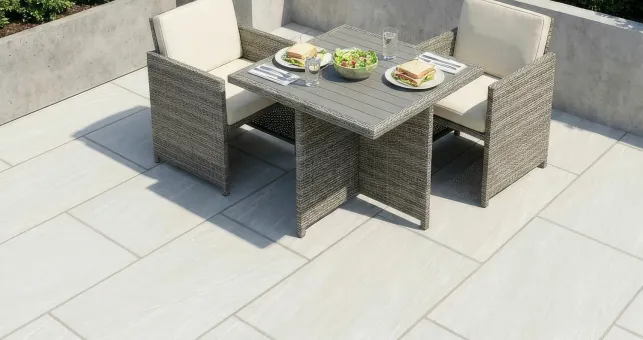
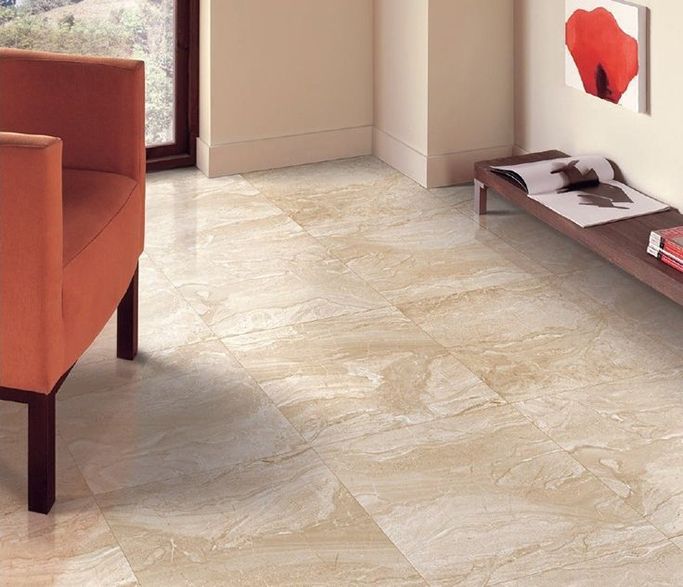
Porcelain is denser and harder than ceramic, which is exactly why it’s such a durable choice for floors and outdoor paving, and exactly why it chips and cracks so easily if you cut it with the wrong tool or technique. A single chipped edge on a visible cut line can ruin an otherwise well-laid job. This guide focuses specifically on getting a clean cut on porcelain, including the thicker 20mm outdoor tiles that need a different approach to a standard indoor porcelain floor tile.
Why porcelain is harder to cut cleanly than ceramic
Porcelain is fired at a higher temperature and to a denser, less porous body than ceramic, which gives it better durability and water resistance but also makes it more brittle under the wrong kind of cutting pressure. A manual score-and-snap cutter, which works well on many ceramic tiles, is generally unsuitable for porcelain, since the scored line doesn’t reliably guide a clean break through such a dense material and often results in an uneven or chipped edge instead. A diamond-bladed wet saw is the standard tool for porcelain for this reason, using continuous water cooling and a fine-grit diamond blade to grind through the material cleanly rather than relying on a score-and-snap break.
What you’ll need

A wet tile saw with a diamond blade rated for porcelain, safety glasses, hearing protection, and gloves. For detail cuts around pipes or fittings, a set of tile nippers or a diamond hole saw is useful alongside the wet saw. If you’re cutting thicker 20mm outdoor porcelain, check that your saw and blade are both rated for that thickness, since not every wet saw copes well with it.
How to cut porcelain tiles step by step
- Measure and mark your cut line clearly, using a fine marker or a pencil suited to the tile surface, and double-check the measurement before cutting, since porcelain is unforgiving of a mistake corrected by trimming further.
- Set up the wet saw with the water reservoir full and the blade properly aligned, since running a diamond blade dry, even briefly, generates heat that can damage both the blade and the tile.
- Feed the tile into the blade slowly and at a steady, consistent pace. Rushing the feed rate is one of the most common causes of a chipped edge on porcelain, since the blade needs time to grind through the dense body rather than being forced through it.
- Support the tile fully on both sides of the cut, particularly for a long cut on a large-format tile, since an unsupported overhang can crack off before the cut is finished.
- Let the blade do the work rather than pushing down. Applying extra downward pressure to speed up a slow cut is a common instinct that generally makes chipping worse rather than better.
- Smooth the cut edge if needed, using a diamond hand pad or the edge of the wet saw blade at a shallow angle, to remove any minor roughness left by the cut before the tile goes in.
Cutting thicker 20mm outdoor porcelain
20mm porcelain, commonly used for outdoor paving and patios, needs a slower feed rate than a standard 8 to 10mm indoor tile, since there’s simply more material for the blade to get through and rushing it is more likely to crack the tile rather than just chip an edge. Check that your blade is rated for the thickness you’re cutting, and consider a two-pass approach on a particularly thick or large paving slab, a shallow scoring pass followed by a full cut, which some fitters find reduces the risk of a crack running off-line on thicker material.
Cutting holes and curves in porcelain
A standard straight cut on a wet saw doesn’t help much for a pipe hole or a curved edge around a fitting. A diamond hole saw, used with water cooling exactly as you would for a straight cut, is the standard tool for a round hole, started at a shallow angle to help the blade bite without skating across the glazed surface. For an irregular curve, a diamond blade angle grinder used carefully, cutting a series of short straight segments around the curve rather than trying to follow it in one continuous motion, generally gives a cleaner result on porcelain than trying to freehand a smooth curve in one pass.
Common reasons porcelain chips when cutting, and how to avoid them
- Feeding the tile too quickly. This is the single most common cause of a chipped edge, since the blade doesn’t have time to cut cleanly through such a dense material.
- Using a blunt or unsuitable blade. A blade not specifically rated for porcelain, or one that’s worn down, is far more likely to chip the surface than a sharp, correctly rated diamond blade.
- Cutting dry, or letting the water supply run low mid-cut. This causes the blade to overheat, which affects both the blade’s lifespan and the quality of the cut.
- Not supporting the tile properly either side of the cut. An unsupported edge, particularly on a large or thin tile, can crack unpredictably rather than following your marked line.
- Rushing a cut on thicker 20mm porcelain at the same speed as a thinner indoor tile. Thicker material needs a slower, more patient feed rate to avoid cracking.
FAQs
What’s the best way to cut porcelain tiles without chipping them?
A diamond-bladed wet saw, fed slowly and steadily rather than rushed, is the most reliable method. A manual score-and-snap cutter generally isn’t suitable for porcelain, since it doesn’t reliably produce a clean break on such a dense material.
Can you cut porcelain tiles with an angle grinder?
Yes, particularly for curves or awkward cuts a wet saw can’t easily manage, using a diamond blade with water cooling where possible. It takes a steadier hand than a wet saw for a long straight cut, so it’s generally better suited to detail work than the main cuts on a job.
How do you cut 20mm outdoor porcelain tiles?
The same wet saw and diamond blade approach as indoor porcelain, but with a slower feed rate to account for the extra thickness, and confirming your blade is rated for that depth. Rushing a cut on thick porcelain is more likely to crack the tile than just chip an edge.
Why does my porcelain tile keep chipping when I cut it?
Usually one of a few causes: feeding the tile too quickly, using a blade that isn’t rated for porcelain or has become dull, cutting without enough water cooling, or not supporting the tile fully either side of the cut. Addressing feed speed and blade condition first resolves most chipping issues.
Can you cut a hole in porcelain tile for a pipe?
Yes, using a diamond hole saw with water cooling, started at a shallow angle to help it bite into the glazed surface without skating. It’s a slower, more careful process than a straight cut, so allow extra time and go steadily rather than forcing it.
Do you need a special blade for porcelain tiles?
Yes. A diamond blade specifically rated for porcelain gives a cleaner cut than a general-purpose tile blade, since porcelain’s density needs a finer grit and consistent cooling to cut through without chipping.
In summary
Cutting porcelain cleanly comes down to the right tool, a diamond-bladed wet saw rather than a manual score-and-snap cutter, and a patient, steady feed rate rather than rushing the blade through. Thicker 20mm outdoor porcelain needs an even slower approach, and holes or curves are worth their own dedicated technique rather than trying to force a straight-cut method to do a job it isn’t suited to.
Browse Tile Mountain’s tile cutting tools to find the right wet saw and diamond blades for your next porcelain job.

Here at Tile Mountain, we not only have a huge range of tiles to suit every purpose, we also have a wealth of tiling knowledge gained from over 30 years in the tile industry, (which we’ll do or best to share with you across these very pages).
Whether you’re looking for the perfect tiles for your next home improvement project, are searching for some style inspiration, or simply need a bit of help and advice, you’re in the right place.