White tiles are one of the best-loved tile choices for homes across the UK, and it’s easy to see why. They’re bright, they go with almost anything, and they make small rooms feel bigger and lighter. You’ll find them in loads of different types too, like ceramic, porcelain, marble-effect, and subway tiles, and each one works better in certain rooms than others.
Bathrooms, kitchens, living rooms, hallways, utility rooms, and even outdoor spaces all have their own best picks, depending on things like water, foot traffic, and how much light the room gets. You can also play with patterns like herringbone or chevron to add some personality without adding colour, and picking the right shade of white (warm, cool, or bright) makes a big difference depending on your room.
Little details like grout colour, tile size, and the colours you pair with your tiles can completely change the final look. And once everything’s installed, a bit of care goes a long way in keeping your white tiles looking fresh for years. This guide walks you through everything you need to know before choosing white tiles for your home.
What Makes White Tiles One of the Most Popular Tile Choices in the UK?

White tiles remain the top-selling tile colour in UK homes due to their versatility, light-reflecting properties, and compatibility with every interior style. Homeowners choose white tiles for kitchens, bathrooms, and hallways to create a brighter, larger-looking space. White bathroom tiles suit both period and contemporary properties without clashing with existing colour schemes.
- Reflects Natural Light: White tiles bounce daylight across a room and increase perceived brightness in small spaces.
- Creates A Larger Visual Space: White tiles make compact bathrooms and kitchens appear more open than darker alternatives.
- Matches Any Colour Palette: White tiles remove the need to coordinate tiling with existing furniture or wall colours.
- Suits Multiple Design Styles: White tiles work across minimalist, Scandinavian, industrial, and traditional interiors.
- Increases Resale Appeal: White tiles offer a neutral base that suits a wider range of buyer preferences.
- Hides Grout Lines Less: White tiles show grout more than darker tiles, though this varies with grout colour and finish.
- Pairs Well With Statement Fixtures: White tiles allow coloured furniture, tiles, or accessories to stand out against a neutral background.
What Are the Different Types of White Tiles Available?

There are seven main types of white tiles available for UK homes, including ceramic, porcelain, marble-effect, subway, hexagonal, textured, and gloss finishes. Each type varies in material, finish, and application, allowing homeowners to select tiles suited to kitchens, bathrooms, floors, or walls.
- Ceramic White Tiles: Ceramic white tiles offer an affordable option for walls and low-traffic floors.
- Porcelain White Tiles: Porcelain white tiles provide higher durability and lower water absorption than ceramic tiles, making them suitable for bathroom floors.
- Marble-Effect White Tiles: Marble-effect white tiles replicate natural marble veining at a lower cost and with reduced maintenance requirements.
- Subway White Tiles: Subway white tiles feature a rectangular shape traditionally used in kitchen splashbacks and metro-style bathroom walls.
- Hexagonal White Tiles: Hexagonal white tiles create a geometric pattern effect, commonly used on bathroom floors and feature walls.
- Textured White Tiles: Textured white tiles add surface depth through ridges or matt relief patterns, reducing slip risk on floors.
- Gloss White Tiles: Gloss white tiles reflect more light than matt finishes, increasing brightness in kitchens and bathrooms.
Which White Tile Ideas Work Best In Bathrooms?

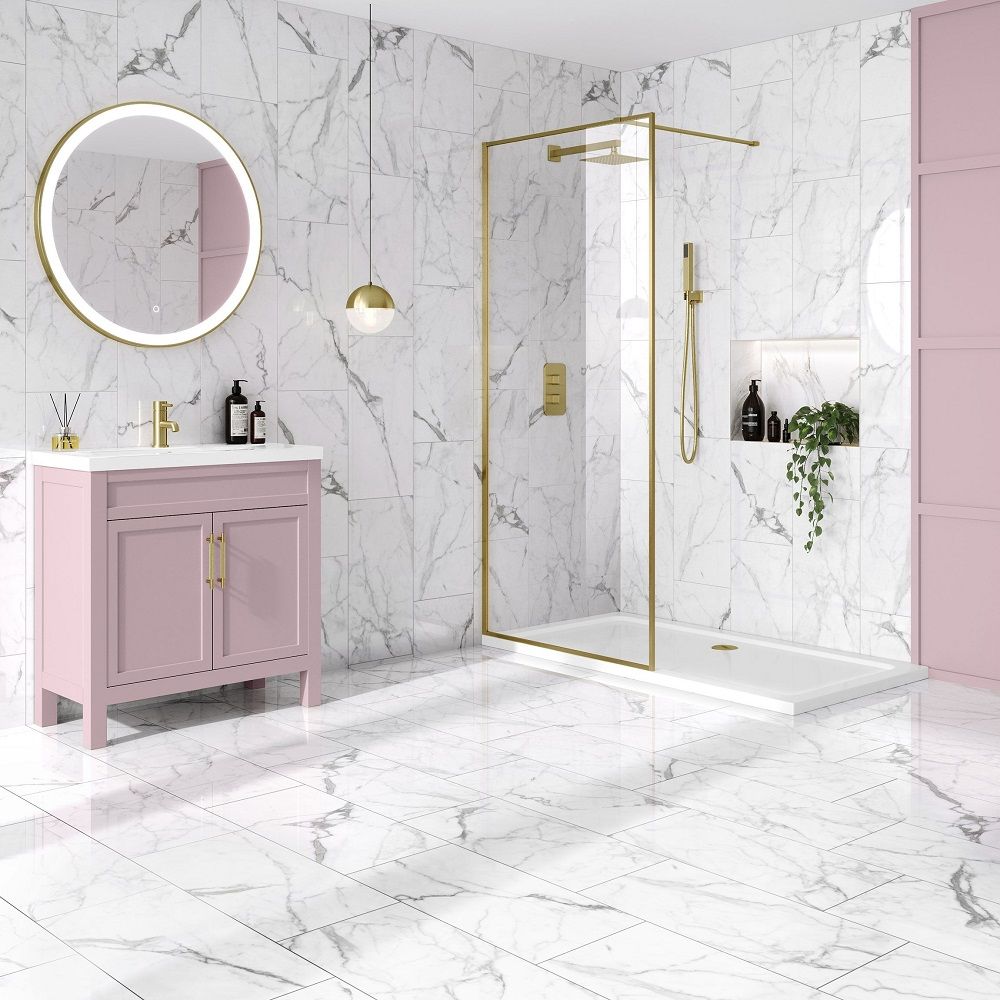
Hexagonal floor tiles, subway wall tiles, gloss white tiles, and marble-effect white tiles work best in UK bathrooms. These tile types manage moisture, reflect available light, and suit both small en-suites and larger family bathrooms.
- Hexagonal White Floor Tiles: Hexagonal white floor tiles add pattern interest to bathroom floors without introducing colour.
- Subway White Wall Tiles: Subway white wall tiles cover shower enclosures and splashback areas with a classic metro-style layout.
- Gloss White Tiles: Gloss white tiles reflect light in windowless bathrooms, increasing perceived brightness.
- Marble-Effect White Tiles: Marble-effect white tiles add a premium appearance to bathroom walls and floors without natural stone maintenance.
- Large Format White Tiles: Large format white tiles reduce the number of grout lines, creating a seamless look in small bathrooms.
- Textured White Tiles: Textured white tiles improve slip resistance on wet bathroom floors.
- White Mosaic Tiles: White mosaic tiles suit shower niches and feature walls where smaller tile formats accommodate curves or recesses.
Which White Tile Ideas Work Best In Kitchens?

Subway white tiles, gloss white tiles, large format white tiles, and marble-effect white tiles work best in UK kitchens. These tile types withstand splashes, resist grease build-up, and complement both worktops and cabinetry across modern and traditional kitchen styles.
- Subway White Tiles: Subway white tiles cover kitchen splashbacks behind hobs and sinks with a classic rectangular layout.
- Gloss White Tiles: Gloss white tiles reflect light across worktops, increasing brightness in kitchens with limited natural light.
- Large Format White Tiles: Large format white tiles reduce grout lines on kitchen floors, easing cleaning around cabinetry.
- Marble-Effect White Tiles: Marble-effect white tiles pair with worktops to create a coordinated stone-look finish without matching natural stone costs.
- Matt White Tiles: Matt white tiles reduce glare under kitchen strip lighting and hide fingerprints better than gloss finishes.
- White Metro Tiles: White metro tiles extend from splashback to ceiling to create a full-height feature wall behind cooking areas.
- Textured White Tiles: Textured white tiles improve grip on kitchen floors near sinks and dishwashers where spills occur.
Which White Tile Ideas Work Best In Living Rooms?
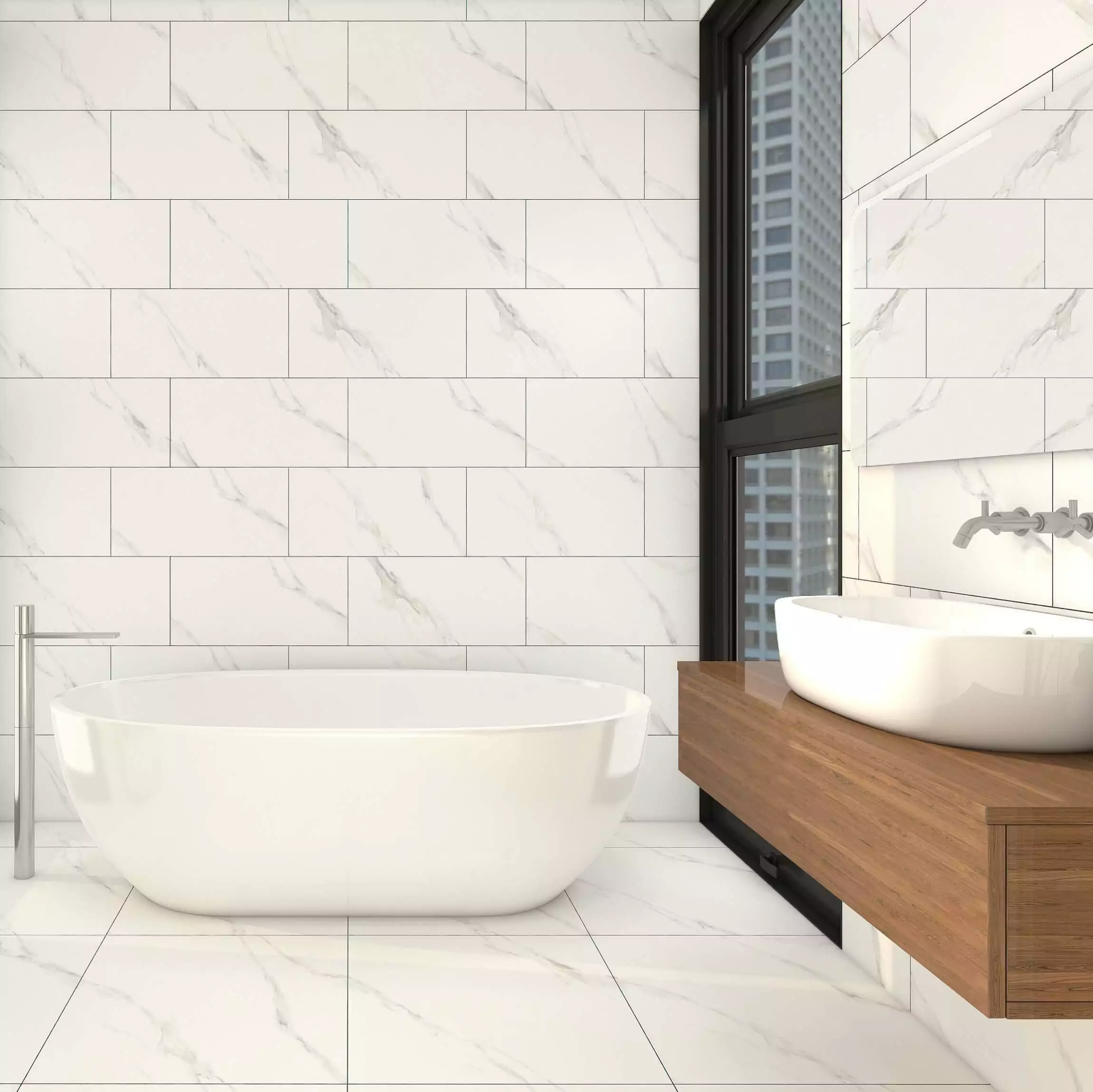
Large format white tiles, matt white tiles, marble-effect white tiles, and white wood-effect tiles work best in UK living rooms. These tile types cover larger floor areas with fewer joins, resist scratching from furniture, and suit open-plan spaces connecting kitchens and lounges.
- Large Format White Tiles: Large format white tiles reduce grout lines across open-plan living room floors, creating a continuous surface.
- Matt White Tiles: Matt white tiles lower glare from overhead and floor-level lighting in the evening.
- Marble-Effect White Tiles: Marble-effect white tiles add a formal appearance to living rooms without the maintenance of natural marble.
- White Wood-Effect Tiles: White wood-effect tiles combine the durability of porcelain with the appearance of whitewashed timber flooring.
- White Tiles With Grey Veining: White tiles with grey veining break up large floor areas without introducing strong colour.
- Textured White Tiles: Textured white tiles add tactile contrast against soft furnishings and rugs.
- Polished White Tiles: Polished white tiles increase light reflection in living rooms with restricted window access.
Which White Tile Ideas Work Best In Hallways?

Textured white tiles, large format white tiles, patterned white tiles, and porcelain white tiles work best in UK hallways. These tile types withstand foot traffic, resist scratching from shoes and pushchairs, and manage moisture brought in from outdoor entry points.
- Textured White Tiles: Textured white tiles improve slip resistance in hallways exposed to rain and wet footwear.
- Large Format White Tiles: Large format white tiles reduce grout lines along narrow hallway floors, creating a streamlined appearance.
- Patterned White Tiles: Patterned white tiles add visual interest to hallway floors, which typically lack furniture or wall decoration.
- Porcelain White Tiles: Porcelain white tiles resist scratching and water absorption better than ceramic tiles, suiting heavy hallway foot traffic.
- White Tiles With Grey Veining: White tiles with grey veining hide scuff marks better than plain white tiles in high-traffic areas.
- Matt White Tiles: Matt white tiles reduce slip risk compared to gloss finishes on hallway floors.
- White Encaustic-Style Tiles: White encaustic-style tiles reference traditional British hallway flooring found in Victorian and Edwardian properties.
Which White Tile Ideas Work Best In Utility Rooms?

Porcelain white tiles, textured white tiles, matt white tiles, and large format white tiles work best in UK utility rooms. These tile types resist water damage from washing machines and sinks, withstand detergent spills, and simplify cleaning in a functional space.
- Porcelain White Tiles: Porcelain white tiles resist water absorption from washing machine leaks and sink splashes better than ceramic tiles.
- Textured White Tiles: Textured white tiles reduce slip risk on utility room floors exposed to water and detergent spills.
- Matt White Tiles: Matt white tiles hide scuffs and marks from appliances better than gloss finishes.
- Large Format White Tiles: Large format white tiles reduce grout lines in utility rooms, limiting areas where dirt and moisture collect.
- White Metro Tiles: White metro tiles cover splashback areas behind sinks and worktops in utility rooms.
- White Tiles With Grey Veining: White tiles with grey veining disguise dirt and marks in a space with heavy daily use.
- Anti-Slip White Tiles: Anti-slip white tiles meet safety requirements in utility rooms where water pools near appliances.
Which White Tile Ideas Work Best Outdoors?

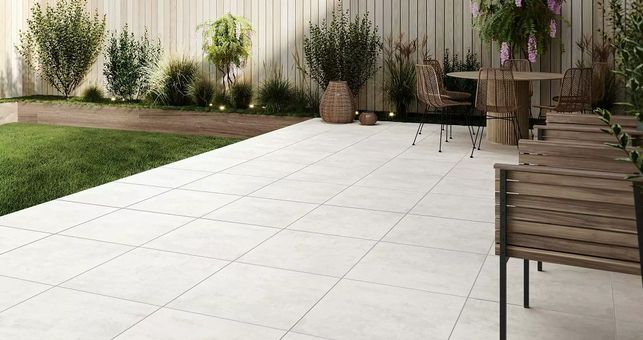
Frost-resistant porcelain tiles, textured white tiles, anti-slip white tiles, and white limestone-effect tiles work best for UK outdoor spaces. These tile types withstand freeze-thaw cycles, wet weather, and foot traffic on patios, garden paths, and outdoor kitchen areas.
- Frost-Resistant Porcelain Tiles: Frost-resistant porcelain tiles withstand UK winter freeze-thaw cycles without cracking.
- Anti-Slip White Tiles: Anti-slip white tiles meet outdoor safety ratings for wet patios and garden steps.
- Textured White Tiles: Textured white tiles improve grip on outdoor floors exposed to rain, moss, and algae.
- White Limestone-Effect Tiles: White limestone-effect tiles replicate natural stone paving without the porosity and staining risk of real limestone.
- Large Format White Tiles: Large format white tiles reduce grout lines on patios, limiting weed growth between joints.
- White Tiles With Grey Veining: White tiles with grey veining disguise dirt, leaf debris, and staining on outdoor floors.
- Through-Body Porcelain Tiles: Through-body porcelain tiles retain colour consistency when chipped, reducing visible wear on outdoor edges and steps.
What Are the Most Popular White Tile Styles and Layouts?
Herringbone, brick bond, stack bond, basketweave, and chevron are the most popular white tile layouts in UK homes. These layouts change the visual direction and pattern of a floor or wall without altering the tile colour, allowing homeowners to add design interest using a single white tile.
- Herringbone Layout: Herringbone layout arranges rectangular white tiles at 90-degree angles, creating a zigzag pattern used in hallways and kitchens.
- Brick Bond Layout: Brick bond layout offsets each row of white tiles by half a tile length, replicating traditional brickwork on walls and floors.
- Stack Bond Layout: Stack bond layout aligns white tiles in straight vertical and horizontal rows, suiting minimalist and contemporary interiors.
- Basketweave Layout: Basketweave layout alternates pairs of white tiles in a woven pattern, commonly used on bathroom and hallway floors.
- Chevron Layout: Chevron layout uses pre-angled white tiles to form a continuous V-shaped pattern, differing from herringbone in its mitred edges.
- Grid Layout: Grid layout places square white tiles in even rows and columns, suiting large format tiles in living rooms and kitchens.
- Vertical Stack Layout: Vertical stack layout runs rectangular white tiles upright on walls, increasing the perceived height of a room.
How Do I Choose the Right Shade of White Tile?

Choosing the right shade of white tile depends on room lighting, wall colour, and desired warmth, with options ranging from bright white to warm white and off-white. Natural light levels and existing decor determine whether a cool, neutral, or warm white shade suits a specific room.
- Bright White Tiles: Bright white tiles suit rooms with limited natural light, maximising brightness through high light reflectance.
- Warm White Tiles: Warm white tiles carry a cream or ivory undertone, suiting rooms with wood furniture or warm colour schemes.
- Cool White Tiles: Cool white tiles carry a blue or grey undertone, suiting modern interiors with chrome or steel fixtures.
- Off-White Tiles: Off-white tiles reduce glare compared to bright white, suiting south-facing rooms with strong natural light.
- Matt White Tiles: Matt white tiles appear softer and less stark than gloss white tiles under artificial lighting.
- Gloss White Tiles: Gloss white tiles intensify brightness through higher light reflectance, suiting north-facing rooms with reduced daylight.
- White Tiles With Undertones: White tiles with grey, beige, or blue undertones should match existing worktops, sanitaryware, or wall paint to avoid colour clashing.
Which Colours Pair Best With White Tiles?

Navy blue, sage green, black, warm wood tones, and soft grey pair best with white tiles in UK interiors. These colours create contrast or complement the neutral base of white tiles, allowing homeowners to introduce personality through furniture, cabinetry, or accessories rather than the tiles themselves.
- Navy Blue: Navy blue cabinetry or accessories create strong contrast against white tiles in kitchens and bathrooms.
- Sage Green: Sage green pairs with white tiles to create a calming, nature-inspired colour scheme popular in UK kitchens.
- Black: Black fixtures, taps, or frames create a monochrome contrast against white tiles, commonly used in bathrooms.
- Warm Wood Tones: Warm wood tones in flooring or furniture soften the neutrality of white tiles and add visual warmth.
- Soft Grey: Soft grey walls or worktops complement white tiles without introducing strong colour contrast.
- Terracotta: Terracotta accessories or accent tiles introduce warmth against white tiles in kitchens and outdoor spaces.
- Brass and Gold Accents: Brass and gold accents add a reflective contrast against white tiles in bathrooms and kitchens.
Which Grout Colour Works Best With White Tiles?

White, light grey, and dark grey grout work best with white tiles, depending on whether a seamless or defined tile pattern is required. Grout colour changes the visual prominence of tile joints without altering the tile itself, allowing homeowners to control how much pattern definition appears on a floor or wall.
- White Grout: White grout matches the tile colour, creating a seamless surface with minimal visible joints.
- Light Grey Grout: Light grey grout softens joint visibility while remaining less prone to staining than white grout.
- Dark Grey Grout: Dark grey grout defines each tile edge, suiting geometric layouts such as herringbone or hexagonal patterns.
- Anthracite Grout: Anthracite grout creates strong contrast against white tiles, commonly used in industrial-style interiors.
- Beige Grout: Beige grout softens the contrast on warm white tiles with cream or ivory undertones.
- Black Grout: Black grout produces the highest contrast against white tiles, emphasising tile shape and layout.
- Stain-Resistant Grout: Stain-resistant grout reduces discolouration from moisture and dirt in bathrooms and kitchens, regardless of grout shade.
Which Tile Sizes Work Best With White Tiles?

Large format tiles, subway tiles, mosaic tiles, and metre-plus slabs work best with white tiles, depending on room dimensions and grout line preference. Tile size determines the number of grout joints and the perceived proportion of a room, allowing homeowners to adjust scale without changing the tile colour.
- Large Format Tiles: Large format tiles start from 600mm x 600mm, limiting grout joints across kitchen and living room floors.
- Subway Tiles: Subway tiles typically measure 75mm x 150mm, suiting splashbacks and bathroom wall coverage.
- Mosaic Tiles: Mosaic tiles measure under 50mm per piece, suiting borders, niches, and curved shower surfaces.
- Metre-Plus Slabs: Metre-plus slabs exceed 1000mm in length, reducing visible joints on larger bathroom and kitchen floors.
- Standard Square Tiles: Standard square tiles measure 300mm x 300mm, suiting small and medium-sized bathroom floors.
- Hexagonal Tiles: Hexagonal tiles measure 150mm to 200mm per side, suiting patterned feature floors.
- Small Format Tiles: Small format tiles under 100mm suit compact spaces such as en-suites, requiring fewer cuts around fixtures and pipework.
Which White Tile Ideas Work For Small Rooms?

Large format white tiles, gloss white tiles, vertical stack layouts, and metre-plus slabs work best for small rooms. These tile types reduce grout lines, maximise light reflection, and create a visual sense of increased floor and wall area within limited square footage.
- Large Format White Tiles: Large format white tiles reduce the number of grout lines across a small floor, creating a continuous surface.
- Gloss White Tiles: Gloss white tiles reflect available light, increasing brightness in small bathrooms and en-suites with limited windows.
- Metre-Plus Slabs: Metre-plus slabs minimise visible joints on compact bathroom floors, reducing visual clutter.
- Vertical Stack Layout: Vertical stack layout on walls draws the eye upward, increasing the perceived height of a small room.
- Small Format Mosaic Tiles: Small format mosaic tiles fit around fixtures and pipework in tight spaces without excessive cutting.
- Light Grey Grout: Light grey grout maintains a seamless appearance while remaining more practical than white grout in small, high-use rooms.
- Wall-to-Floor White Tiling: Wall-to-floor white tiling removes colour breaks between surfaces, expanding the perceived boundaries of a small room.
Which Common Mistakes Should Be Avoided When Choosing White Tiles?

Choosing the wrong grout colour, ignoring lighting conditions, skipping slip ratings, and overlooking maintenance requirements are the most common mistakes when choosing white tiles. These errors affect the long-term appearance, safety, and upkeep of white tiles across UK kitchens, bathrooms, and outdoor spaces.
- Choosing The Wrong Grout Colour: Choosing the wrong grout colour causes staining or visual clashing that becomes visible within months of installation.
- Ignoring Lighting Conditions: Ignoring lighting conditions results in tiles appearing too stark or too dull, as white shades shift under natural and artificial light.
- Skipping Slip Ratings: Skipping slip ratings increases fall risk in bathrooms, kitchens, and outdoor areas where white tiles come into contact with water.
- Overlooking Maintenance Requirements: Overlooking maintenance requirements leads to premature staining, as gloss white tiles show marks and scratches more than matt finishes.
- Selecting Non-Frost-Resistant Tiles Outdoors: Selecting non-frost-resistant tiles outdoors causes cracking during UK winter freeze-thaw cycles.
- Mismatching Tile Undertones: Mismatching tile undertones against existing worktops or sanitaryware creates a visible colour clash despite both being “white”.
- Underestimating Grout Line Visibility: Underestimating grout line visibility results in a busier floor or wall appearance than intended, particularly with small format tiles.
How Do I Install and Maintain White Tiles?
Installing white tiles requires level substrates, colour-matched grout, and correct spacing, while maintenance requires regular sealing, pH-neutral cleaning products, and prompt stain removal. These steps protect the appearance of white tiles across kitchens, bathrooms, and outdoor spaces where staining and grout discolouration are most visible.
- Level Substrate Preparation: Level substrate preparation prevents lippage between white tiles, which shows more visibly than on darker colours.
- Correct Tile Spacing: Correct tile spacing maintains consistent grout lines, supporting the visual patterns used in herringbone and basketweave layouts.
- Colour-Matched Grout Application: Colour-matched grout application reduces the visibility of uneven joints during installation.
- Sealing Porous Tiles: Sealing porous tiles, such as marble-effect or natural stone-look white tiles, prevents staining from spills and grease.
- pH-Neutral Cleaning Products: pH-neutral cleaning products prevent discolouration and etching on white tile surfaces over time.
- Prompt Stain Removal: Prompt stain removal on white tiles reduces the risk of permanent marks from coloured liquids or food.
- Regrouting Discoloured Joints: Regrouting discoloured joints restores the appearance of white tiles without replacing the tiles themselves.

Here at Tile Mountain, we not only have a huge range of tiles to suit every purpose, we also have a wealth of tiling knowledge gained from over 30 years in the tile industry, (which we’ll do or best to share with you across these very pages).
Whether you’re looking for the perfect tiles for your next home improvement project, are searching for some style inspiration, or simply need a bit of help and advice, you’re in the right place.