Picking kitchen tiles isn’t just about looks. Metro tiles, patterned tiles, herringbone, big porcelain slabs, stone-effect designs, and 3D textured tiles all do different jobs, so the best pick depends on your kitchen’s size and the vibe you’re going for. Right now, bold colours, zellige, terrazzo, and matt black are the trends replacing all-white kitchens.
Where you’re tiling matters too. Floors need to handle spills and foot traffic, so porcelain and matt tiles win there. Walls and splashbacks have more room to play, so that’s where colour and pattern can shine. Your cabinet colour, how much light your kitchen gets, and the style you’re after, whether that’s Scandi, industrial, farmhouse, traditional, or minimalist, all shape which tile actually fits.
Kitchen size changes the game plan. Small kitchens look best with light, large tiles and less pattern, while bigger kitchens can handle bold colours and busier designs without feeling too much. Budget-wise, tiling a UK kitchen usually costs somewhere between £45 and £130 per square metre.
And once the tiles are down, keeping them looking good just takes regular cleaning, healthy grout, and a bit of care near the hob. Steering clear of a few common mistakes, wrong tile size, bad grout colour, no heat protection, ordering too few tiles, saves a lot of hassle down the line.
What Are the Best Kitchen Tile Ideas?
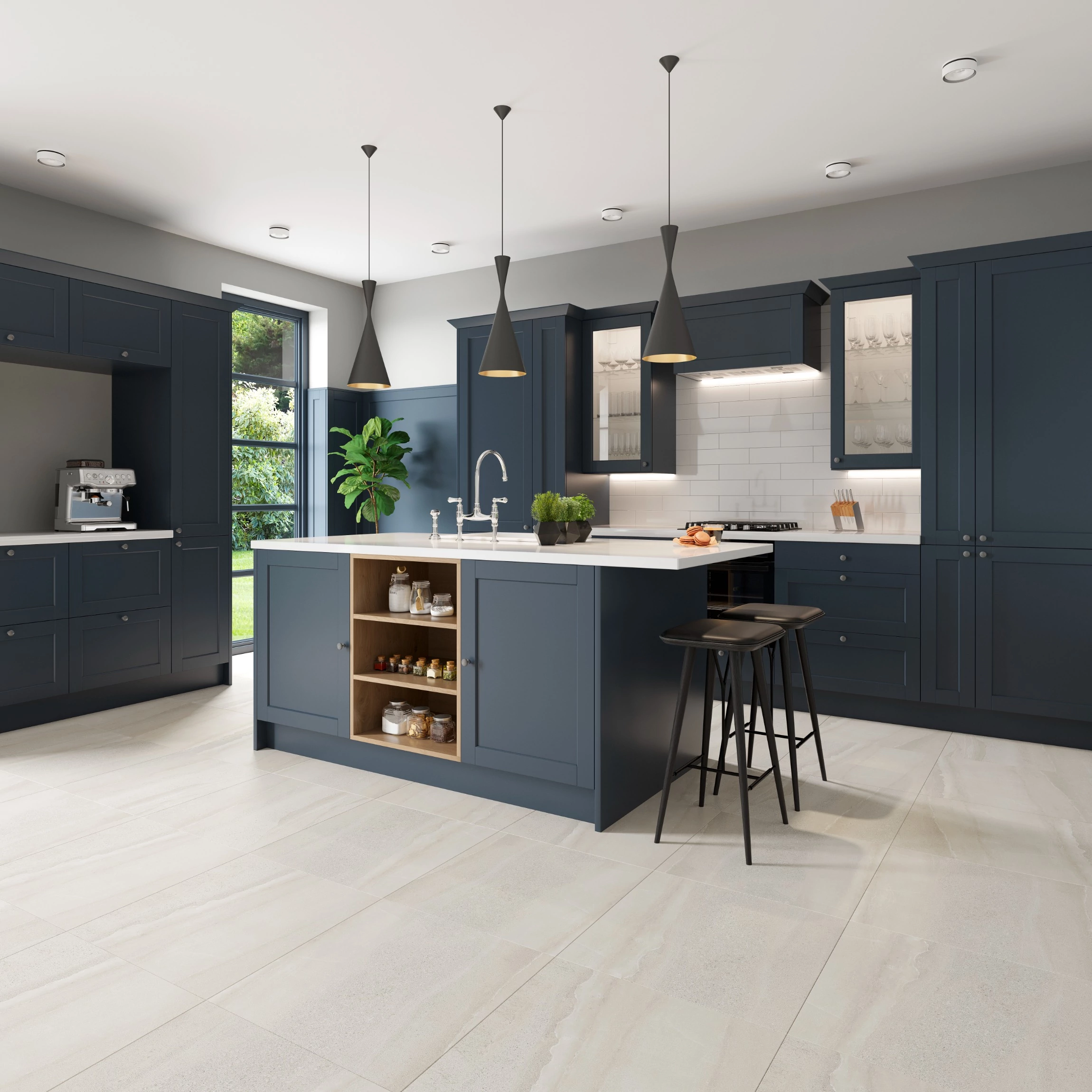
The best kitchen tile ideas for UK homes are metro tiles, patterned tiles, herringbone layouts, large-format porcelain, natural stone-effect tiles, coloured splashback tiles, and textured 3D tiles.
Metro Tiles

Metro tiles give a kitchen a clean, classic look. The small rectangular shape makes tight kitchens feel bigger and brighter. Galley kitchens and white colour schemes suit metro tiles best.
Patterned Tiles

Patterned tiles bring colour and personality to a plain kitchen. Moroccan prints and geometric shapes work well on a single feature wall. Plain cabinets keep the pattern as the main focus.
Herringbone Layout

Herringbone tiling adds movement and depth to a flat wall. Angled tiles, instead of straight rows, pull the eye toward the pattern. Cooker splashbacks and feature walls suit herringbone best.
Large-Format Porcelain Tiles

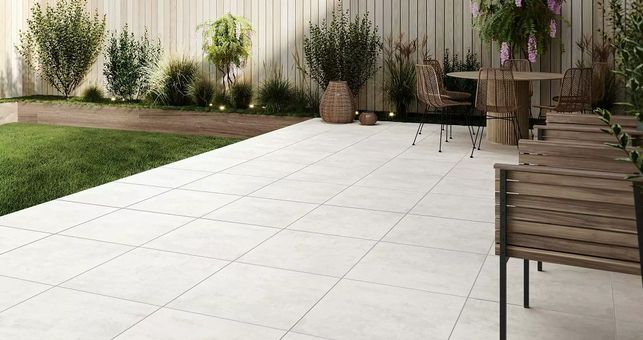
Large porcelain tiles cut grout lines on a kitchen floor by up to 60%. Fewer grout lines mean less scrubbing and a floor that looks bigger. Open-plan kitchens gain the most from this style.
Natural Stone-Effect Tiles
Stone-effect tiles copy the look of marble and slate for less money. Prices stay 30-50% below real stone, with similar visual impact. Cleaning and maintenance stay simpler than with natural stone.
Coloured Splashback Tiles

Coloured splashback tiles add a bold contrast behind the worktop. Teal, terracotta, and navy rank among the top UK kitchen colours in 2026. One coloured wall often brightens an entire room.
Textured 3D Tiles
3D tiles create shadow and texture on a wall. Spotlights and cabinet lights sharpen the raised pattern’s visual effect. A single feature wall works better than full-room coverage.
What Are the Most Popular Kitchen Tile Ideas Right Now?
The most popular kitchen tile ideas right now are bold coloured tiles, zellige tiles, large-format slabs, terrazzo-effect tiles, and matt black tiles.
Bold Coloured Tiles
Bold coloured tiles are replacing plain white and grey kitchens. Deep greens, warm terracotta, and navy blue lead UK kitchen colour trends in 2026. One coloured wall or splashback is enough to update a whole kitchen.
Zellige Tiles

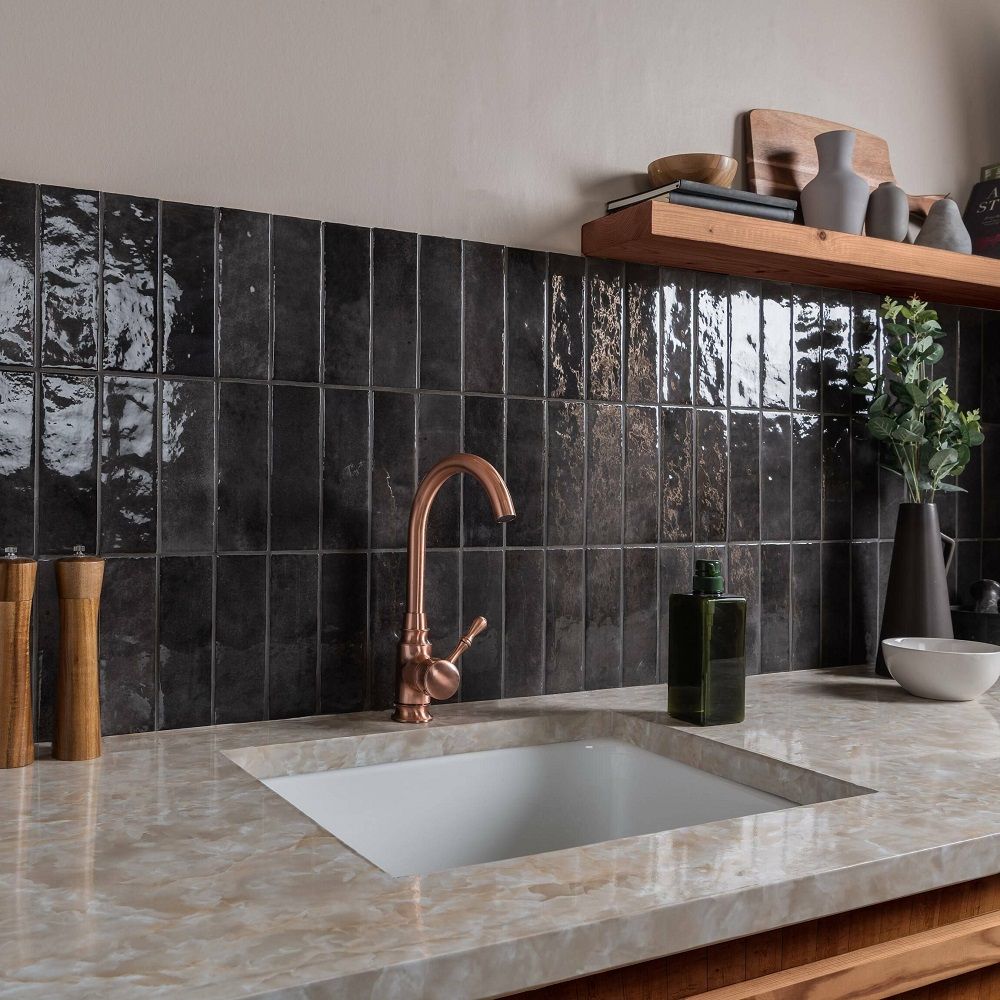
Zellige tiles bring a handmade, uneven texture to kitchen walls. Each tile has slight variations in shade and shape, giving a natural, artisan look. This style suits kitchens that want warmth over a flawless finish.
Large-Format Slabs

Large-format slabs cover more wall or floor space with fewer joins. Fewer joins mean less grout and a sleeker, more seamless surface. This style works well for kitchen islands and waterfall countertop edges.
Terrazzo-Effect Tiles

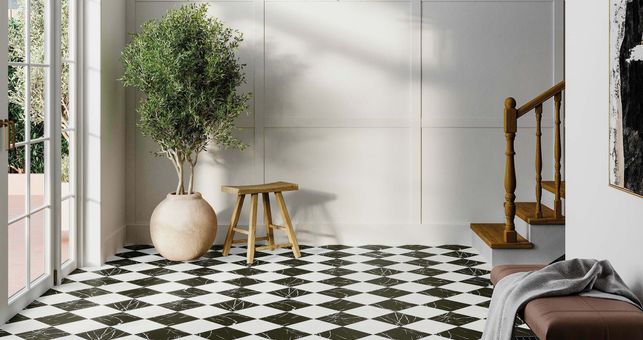
Terrazzo-effect tiles copy the speckled pattern of crushed stone and marble chips. This look brings a retro feel back into modern kitchens. Light-coloured terrazzo suits bright, airy kitchens best.
Matt Black Tiles
Matt black tiles add a striking, modern contrast to a kitchen. Brass and gold fittings stand out clearly against a matt black backdrop. This tile style suits kitchens aiming for a bold, dramatic finish.
What Kitchen Tile Ideas Work Best for Different Areas of the Kitchen?

Kitchen tile ideas work best when matched to the area’s function: floor tiles for durability, wall tiles for style, and splashback tiles for heat and stain resistance. Each area has different practical demands, so tile choice changes accordingly.
What Are the Best Kitchen Floor Tile Ideas?

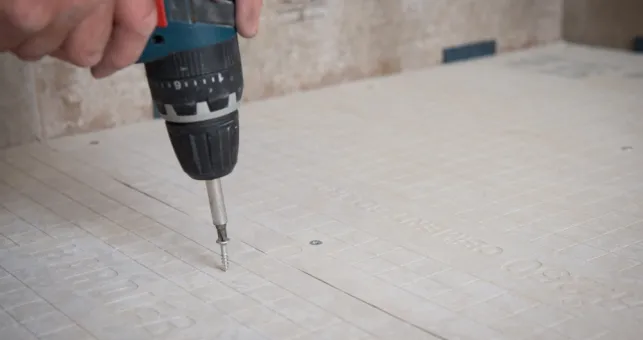
The best kitchen floor tile ideas are large-format porcelain, natural stone-effect tiles, and matt-finish tiles. Porcelain resists scratches and water better than most flooring materials. Matt-finish tiles reduce slip risk compared to high-gloss finishes, making them a safer choice for busy kitchens. Stone-effect tiles add texture underfoot while hiding dirt and marks better than plain, single-tone floors.
What Are the Best Kitchen Wall Tile Ideas?

The best kitchen wall tile ideas are metro tiles, patterned tiles, and zellige tiles. Metro tiles suit full-wall coverage due to their simple, repeatable shape. Patterned and zellige tiles work best on a single feature wall, where their detail stands out without overwhelming the room. Wall tiles carry less weight than floor tiles, so thinner, decorative styles perform well here.
What Are the Best Kitchen Splashback Tile Ideas?

The best kitchen splashback tile ideas are coloured tiles, herringbone layouts, and heat-resistant glass-effect tiles. Splashback tiles sit directly behind hobs and sinks, so heat resistance and easy cleaning matter more than in other areas. Coloured tiles add contrast in a small, high-visibility space. Herringbone layouts add pattern without needing a large surface area to work.
How Do You Choose Kitchen Tile Colours?

Kitchen tile colours depend on cabinet colour, room size, and natural light levels. Matching tile colour to these three factors keeps the kitchen balanced and avoids a clashing finish.
Match Tiles to Cabinet Colour
Light tiles suit dark cabinets, and dark tiles suit light cabinets. This contrast keeps the kitchen visually balanced instead of blending into one flat tone. Neutral tiles, such as white or grey, work with almost any cabinet colour.
Consider Room Size
Light-coloured tiles make small kitchens feel bigger and brighter. Dark tiles suit larger kitchens, where they add warmth without making the space feel cramped. Small kitchens with limited natural light benefit most from pale or reflective tile finishes.
Check Natural Light Levels
Kitchens with low natural light suit lighter tile colours, as they reflect more available light. Kitchens with strong natural light can handle darker or bolder tile colours without feeling closed in. South-facing kitchens usually get more light and support darker tile choices better than north-facing ones.
What Kitchen Tile Styles Create the Best Interior Designs?

Kitchen tile styles that create the best interior designs are Scandinavian, industrial, farmhouse, traditional, and modern minimalist. Each style pairs a specific tile pattern with a matching colour palette and layout.
Scandinavian Style
Scandinavian kitchens pair plain white or pale grey tiles with simple metro layouts. This style relies on clean lines and light tones to create an airy, uncluttered feel. Wood-effect accents work well alongside these tiles to add warmth without breaking the minimal look.
Industrial Style
Industrial kitchens pair dark, matt tiles with exposed brick-effect or concrete-look finishes. Black, charcoal, and deep grey tones dominate this style. Metal fittings and open shelving suit this tile style better than glossy or pastel finishes.
Farmhouse Style
Farmhouse kitchens pair patterned or textured tiles with warm, earthy colours. Terracotta, cream, and sage green tiles suit this style best. Herringbone and zellige layouts add a handmade feel that fits the farmhouse look.
Traditional Style
Traditional kitchens pair classic metro or brick-bond tiles with muted, timeless colours. Cream, sage green, and soft blue tones suit this style best. Decorative border tiles and moulded edge trims add a period feel that fits older or country-style homes.
Modern Minimalist Style
Modern minimalist kitchens pair large-format porcelain tiles with a single neutral colour. Fewer grout lines and a plain colour palette keep the space looking sleek and uncluttered. Matt black or white tiles both suit this style, depending on the rest of the kitchen’s tone.
What Kitchen Tile Materials and Effects Create Different Looks?

Kitchen tile materials and effects that create different looks are ceramic, porcelain, natural stone, glass, and encaustic-effect tiles. Each material carries a distinct texture, finish, and durability level.
Ceramic Tiles
Ceramic tiles give a lightweight, budget-friendly finish. This material suits kitchen walls and splashbacks better than heavy-traffic floors. Ceramic tiles come in more colour and pattern options than most other tile materials.
Porcelain Tiles
Porcelain tiles give a hard-wearing, water-resistant finish. This material suits kitchen floors due to its scratch resistance and low water absorption. Porcelain also replicates wood, stone, and concrete looks at a lower cost than the real materials.
Natural Stone Tiles
Natural stone tiles give a unique, one-of-a-kind finish. Marble, granite, and slate each carry natural veining and colour variation not found in manufactured tiles. This material needs regular sealing to resist stains and moisture.
Glass Tiles
Glass tiles give a reflective, light-enhancing finish. This material suits kitchen splashbacks, where light bounces off the surface to brighten the area. Glass tiles resist heat and stains better than most ceramic finishes.
Encaustic-Effect Tiles
Encaustic-effect tiles give a bold, patterned finish inspired by traditional cement tiles. This material suits feature floors and statement walls in farmhouse and traditional kitchens. Modern encaustic-effect versions use porcelain printing, which lowers cost and increases durability compared to original cement tiles.
How Do You Plan a Kitchen Tile Layout?

A kitchen tile layout is planned by measuring the space, choosing a tile pattern, and deciding the grout width before installation. These three steps prevent wasted tiles and an uneven finish.
Measure the Space
Measuring the kitchen space gives an accurate tile quantity for the job. Total floor or wall area, divided by tile size, gives the base number of tiles needed. Adding 10% extra covers cuts, breakages, and future repairs.
Choose a Tile Pattern
Choosing a tile pattern sets the visual direction of the kitchen. Straight-lay patterns suit small kitchens, as they create a simple, uninterrupted look. Herringbone and brick-bond patterns suit larger kitchens, where the extra detail adds visual interest without cluttering the space.
Decide the Grout Width
Grout width affects the overall look and maintenance of a tiled surface. Thin grout lines, around 2-3mm, suit large-format tiles and give a seamless finish. Wider grout lines, around 4-5mm, suit smaller or handmade tiles like zellige, where slight size variation needs more room.
Plan the Starting Point
The starting point determines how cut tiles are distributed across a kitchen. Starting from the room’s centre keeps cut tiles even on both sides of a wall or floor. Starting from a focal wall, such as behind the hob, keeps full tiles visible in the most noticeable area.
What Kitchen Tile Ideas Work for Different Kitchen Sizes?

Kitchen tile ideas that work for different kitchen sizes are light, large-format tiles for small kitchens and bold, patterned tiles for large kitchens. Tile size and colour both affect how spacious a kitchen looks and feels.
Small Kitchens
Small kitchens suit light-coloured, large-format tiles. Fewer grout lines and pale tones make a tight space feel bigger and brighter. Metro tiles laid in a straight pattern also stretch the visual width of narrow galley kitchens.
Medium Kitchens
Medium kitchens suit a mix of plain and patterned tiles. A patterned splashback or feature wall adds character without overwhelming the room’s balance. Neutral floor tiles keep the overall space feeling calm and cohesive.
Large Kitchens
Large kitchens suit bold colours, dark tones, and detailed patterns. Herringbone layouts and zellige tiles add texture without making the room feel cramped. Large kitchens can also handle contrast, such as dark floor tiles against light walls, without losing balance.
Open-Plan Kitchens
Open-plan kitchens suit large-format tiles in a single consistent colour. One continuous tile style across the kitchen and living area keeps the flow uninterrupted. Matching floor tiles between zones avoids a visual break where the kitchen meets the living space.
How Much Do Kitchen Tiles Cost in the UK?

Kitchen tiles in the UK cost between £20 and £150+ per square metre, with installation adding further labour costs on top. Tile material, tile size, and kitchen area all affect the final price.
Tile Material Costs
Ceramic tiles cost the least, at around £20-£25 per square metre. Porcelain tiles sit in the mid-range, at £90-£110 per square metre for standard options. Premium porcelain, natural stone, and specialist designs cost £150 or more per square metre.
Labour Costs
UK tilers typically charge £25-£55 per square metre for labour only in 2026. Floor tiling costs slightly less, at £25-£40 per square metre, while wall tiling costs £30-£45 per square metre due to the extra work involved in vertical cuts and fittings. Rates run 20-30% higher in London and the South East compared to the rest of the UK.
Splashback Tiling Costs
Splashback tiling costs more per square metre than a full wall or floor, since the job involves cutting around sockets and the hob rather than covering a large open area. A small splashback often carries a half-day minimum labour charge, even for a compact area.
Total Kitchen Tiling Cost
A full kitchen tiling project, including materials and labour, typically costs £45-£130 per square metre. Tiling a full kitchen floor costs around £800 on average. Adding 10-15% extra tiles to the total order covers cuts, breakages, and future repairs.
How Do You Keep Kitchen Tiles Looking Good Long-Term?

Kitchen tiles stay looking good long-term through regular cleaning, prompt grout care, and protection from heat and heavy impact. These three habits prevent the most common causes of tile damage and discolouration.
Clean Tiles Regularly
Regular cleaning removes grease and food splashes before they set into the tile surface. A weekly wipe with warm water and mild detergent keeps most kitchen tiles free of build-up. Abrasive scourers scratch glazed tiles, so a soft cloth or sponge works better for daily cleaning.
Seal and Maintain Grout
Grout sealing blocks moisture and staining in the gaps between tiles. Resealing grout once a year keeps it resistant to water damage and discolouration. Discoloured or cracked grout allows moisture to reach the wall or floor beneath the tiles.
Wipe Spills Immediately
Immediate spill cleaning stops acidic foods and liquids from marking the tile surface. Wine, tomato sauce, and citrus juice stain grout and some natural stone tiles if left too long. A quick wipe prevents most stains from setting in.
Protect Tiles from Heat and Impact
Heat protection prevents cracking on tiles near the hob or oven. Trivets and heat mats reduce direct contact between hot pans and the tile surface. Dropped pots and heavy utensils cause chips on the tile edge, so a rubber mat near the cooker reduces impact risk.
Avoid Harsh Chemical Cleaners
Avoiding harsh chemicals protects the tile glaze and grout colour. Bleach and ammonia-based cleaners wear down grout over time and dull the tile’s surface shine. A pH-neutral cleaner keeps both tiles and grout in better condition for longer.
How Do You Choose Kitchen Tiles for a Small Kitchen?

Kitchen tiles for a small kitchen are chosen by prioritising light colours, large-format sizes, and minimal pattern. These three factors work together to make a tight space feel bigger and brighter.
Choose Light Colours
Light-coloured tiles reflect more available light around a small kitchen. White, cream, and pale grey tiles brighten a room that lacks natural light. Dark tiles absorb light and can make a small kitchen feel more closed in.
Pick Large-Format Tiles
Large-format tiles reduce the number of grout lines across a small floor or wall. Fewer grout lines create a smoother, less broken-up surface, which makes the room look bigger. Small mosaic tiles have the opposite effect, as they add more visual clutter to a tight space.
Limit Bold Patterns
Limiting bold patterns keeps a small kitchen feeling calm rather than cramped. One patterned splashback or feature wall adds interest without overwhelming the room. Full-room patterns compete with cabinets and worktops, which makes a small space feel busier.
Use Vertical or Diagonal Layouts
Vertical and diagonal tile layouts stretch the visual height or width of a small kitchen. Vertically stacked metro tiles draw the eye upward, making ceilings feel higher. A diagonal floor layout widens the visual span of a narrow galley kitchen.
Match Grout Colour to Tiles
Matching grout colour to the tile keeps the surface looking like one continuous area. Contrasting grout breaks up the tile surface, which adds visual weight to a small space. Same-tone grout keeps the finish seamless and the room feeling larger.
What Are the Common Kitchen Tile Mistakes That Should Be Avoided?

The common kitchen tile mistakes that should be avoided are choosing the wrong tile size, ignoring grout colour, skipping heat resistance near the hob, and underestimating tile quantity. These mistakes lead to a poor finish or extra cost later.
Choosing the Wrong Tile Size
Wrong tile size makes a kitchen look smaller or more cluttered than needed. Small tiles in a small kitchen add too many grout lines, which breaks up the space. Large tiles in a tight galley kitchen can also look out of proportion without careful planning.
Ignoring Grout Colour
Ignoring grout colour causes an uneven or distracting tile finish. Grout that’s too dark against a light tile draws attention to every line rather than the tile itself. Matching grout tone to the tile keeps the surface looking clean and intentional.
Skipping Heat Resistance Near the Hob
Skipping heat-resistant tiles near the hob risks cracking and discolouration over time. Standard ceramic tiles can degrade faster behind a cooker due to constant heat exposure. Heat-resistant porcelain or glass tiles hold up better in this high-risk area.
Underestimating Tile Quantity
Underestimating tile quantity leads to mismatched batches and delayed projects. Tile dye lots vary between production runs, so a later top-up order may not match the original shade. Ordering 10-15% extra tiles upfront avoids this problem entirely.
Overlooking Maintenance Needs
Overlooking maintenance needs results in tiles that look worn faster than expected. Natural stone tiles need regular sealing, which some buyers don’t budget time or cost for. Porcelain and ceramic tiles suit kitchens where lower maintenance is a priority.
Forgetting About Slip Resistance
Forgetting slip resistance creates a safety risk on kitchen floors. High-gloss floor tiles look sleek but become slippery when wet, especially near the sink. Matt or textured floor tiles reduce this risk without changing the overall style.